





Introducing GPT-5.4-Cyber
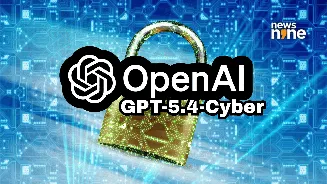
Following a recent announcement from rival Anthropic regarding their new AI model, OpenAI has responded by launching GPT-5.4-Cyber. This specialized iteration
of their existing GPT-5.4 model, which debuted in March, is meticulously crafted to serve the needs of defensive cybersecurity professionals. The core innovation lies in its adjusted refusal boundary, allowing for more extensive engagement in legitimate cybersecurity operations. This enables advanced defensive workflows, such as the capability to perform binary reverse engineering. This means security experts can now analyze compiled software for potential malware, identify vulnerabilities, and assess security robustness without the necessity of having access to the original source code, significantly streamlining threat analysis and mitigation efforts.
Controlled Access Policy
In a strategic move mirroring its competitor, OpenAI is rolling out GPT-5.4-Cyber through a phased and controlled release. Initially, access will be granted to a select group of vetted security vendors, organizations, and researchers. This cautious approach is due to the model's more permissive design, which necessitates careful management. OpenAI emphasizes that while this model is designed to be more flexible for cybersecurity tasks, limitations may still apply, particularly concerning 'no-visibility' uses like Zero-Data Retention (ZDR). To further facilitate secure and authenticated access, OpenAI is expanding its Trusted Access for Cyber (TAC) program. This initiative, first introduced in February, provides automated identity verification for individuals and collaborates with select organizations to offer access to more cyber-permissive models, ensuring that only legitimate cybersecurity defenders can leverage this powerful tool.
Gaining Access via TAC
Access to OpenAI's cutting-edge GPT-5.4-Cyber model is primarily facilitated through their expanded Trusted Access for Cyber (TAC) program. For individual users, the pathway to verification involves visiting chatgpt.com/cyber, where their identity as a cybersecurity defender can be authenticated. For enterprise clients, the process involves reaching out to their dedicated OpenAI representative to request trusted access for their teams. This tiered access system ensures that users who demonstrate a commitment to cybersecurity defense and are willing to undergo verification receive priority. This structured approach not only aims to streamline the onboarding process for legitimate users but also reinforces OpenAI's commitment to responsible AI deployment within the sensitive domain of cybersecurity, ensuring the tool is utilized for its intended defensive purposes.
Model Comparison Insights
When contrasting GPT-5.4-Cyber with Anthropic's recently launched Mythos model, several distinctions emerge. GPT-5.4-Cyber is an evolution built upon an existing, established GPT model architecture, signifying iterative enhancement of proven technology. In contrast, Mythos represents a completely new iteration of Anthropic's Claude AI. Anthropic is also adopting a restricted release strategy for Mythos, making it available to a limited number of companies as part of their 'Project Glasswing.' This project is a carefully managed initiative allowing select organizations to utilize an unreleased Claude Mythos Preview model specifically for defensive cybersecurity applications. While both models target the cybersecurity defense sector, their underlying development philosophies and release approaches show noteworthy differences.