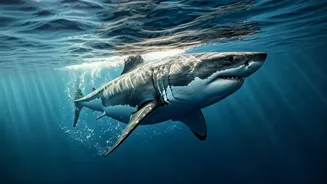

Sharks: The Eating Machines
One of the most persistent myths surrounding sharks is that they are relentless, indiscriminate eating machines, constantly seeking human flesh. This misconception
is largely fueled by dramatic depictions in media, especially during Shark Week. However, the truth is far more nuanced. Sharks are apex predators, playing a crucial role in marine ecosystems, but they are not inherently driven to attack humans. Actual shark attacks are rare, and most are cases of mistaken identity, where sharks mistake humans for their typical prey. Many shark species are actually quite shy and avoid contact with humans. Furthermore, human activities, such as overfishing and habitat destruction, pose a far greater threat to shark populations than sharks do to humans. Scientists work to provide a more accurate picture by studying shark behavior and ecology to inform conservation efforts, emphasizing the importance of respecting these magnificent creatures and understanding their place in the ocean.
Bloodlust: The Frenzy Myth
Another prevalent myth, heavily promoted by Shark Week, is the idea of sharks going into a feeding frenzy upon encountering blood in the water. While it's true that sharks have a keen sense of smell and can detect blood, the frenzy scenario is vastly exaggerated. The conditions that can trigger a feeding frenzy are specific and relatively rare, typically involving the presence of large amounts of food or an injured animal, where multiple sharks are drawn to a concentrated source. Most encounters with sharks do not result in a feeding frenzy; often, sharks will investigate and then move on. This misconception misrepresents shark behavior and creates unnecessary fear. Sharks don't see blood and instantly become violent killers; their reactions are more complex, and influenced by a variety of factors. Scientific research continually investigates and monitors shark behavior to counter sensationalized portrayals and highlight that most shark interactions are not aggressive, especially when humans are not actively interfering with their environment.
Sharks: Unpredictable and Aggressive
Shark Week often portrays sharks as inherently aggressive and unpredictable, further instilling fear. While sharks are predators and capable of causing harm, their behavior is far more complex than this simplistic view suggests. Shark behavior is influenced by various factors, including the species, the environment, and the presence of prey. Sharks do not attack without any provocation, and their behavior often follows patterns based on factors such as feeding habits and mating rituals. Scientific studies have shown that sharks often exhibit specific hunting strategies and social behaviors, depending on the species and the environment. Also, certain species tend to be more docile and not aggressive, such as the nurse shark. Understanding these patterns is crucial for debunking the myth of unpredictable aggression and developing effective conservation strategies. These behaviors are studied extensively by scientists to develop conservation strategies that help to protect the creatures and their environments from human impact.
Great Whites: Constant Hunters
Great white sharks are often depicted as relentless, always-hunting machines, always looking for their next meal. Although they are formidable predators, their hunting behaviors are more specific and strategic than is generally portrayed. Great white sharks have specific prey preferences, often focusing on marine mammals like seals and sea lions, and their hunting strategies are often adapted to the behavior of their target prey. Studies of their movements reveal patterns that indicate periods of active hunting interspersed with periods of rest and exploration. Furthermore, the great white shark, and other sharks, are highly migratory animals, meaning they migrate across vast stretches of ocean to find food, mate, and give birth to their young. This behavior contrasts sharply with the popular image of a constant, indiscriminate hunter. Therefore, scientific research constantly offers more data that counters common myths about great whites.
Sharks: The Perfect Machines
Shark Week sometimes implies that sharks are perfect, invulnerable machines, perfectly adapted and unchanged over millions of years. The truth is that sharks, like all living things, are subject to environmental pressures and are constantly evolving. Overfishing, habitat loss, and climate change pose significant threats to shark populations worldwide. Many shark species are critically endangered, facing severe declines due to human activities. Shark evolution is an ongoing process; they are not static creatures. Scientists continually study the impact of these changes to better understand and protect shark populations. This includes studying their genetic diversity, behavior, and reproductive patterns. The narrative of the “perfect machine” obscures the reality of their vulnerability and the urgent need for conservation efforts.