







Energy Security & LPG Reliance
India's energy landscape is significantly shaped by its substantial reliance on imported fossil fuels, with over 80 percent of its energy requirements
met through external sources. This vulnerability was starkly highlighted by global supply chain disruptions, which, in turn, escalated LPG prices. This surge in costs posed a considerable challenge, particularly for households benefiting from schemes like the Pradhan Mantri Ujjwala Yojana. The nation's import bill for LPG reached approximately 21 million tonnes in 2024, underscoring the economic and strategic implications of this dependency. Addressing this challenge is paramount for enhancing national energy security and promoting self-sufficiency under the 'Atmanirbhar Bharat' initiative. The development of domestically produced alternatives is therefore crucial to mitigate these risks and foster a more resilient energy infrastructure for the country.
The Promise of DME Fuel
Dimethyl Ether (DME) emerges as a promising clean-burning synthetic fuel, offering a viable alternative to traditional energy sources. Its combustion characteristics are notably superior, producing significantly reduced emissions of harmful substances such as soot, nitrogen oxides (NOx), and sulfur oxides (SOx), along with a decrease in particulate matter. This makes DME a far more environmentally friendly option compared to conventional fuels. Crucially, DME exhibits comparable thermal efficiency, meaning its performance in energy generation is on par with existing fuels, facilitating its integration into current systems. The Bureau of Indian Standards (BIS) has recognized its potential by establishing the IS 18698:2024 standard, which permits the blending of DME with LPG up to a 20 percent ratio for domestic, commercial, and industrial applications. Experts indicate that even an 8 percent blend can be implemented without requiring any modifications to existing infrastructure, including cylinders, regulators, hoses, and burners, making its adoption practical and cost-effective.
Economic & Environmental Impact
The potential economic benefits of adopting DME technology are substantial. Preliminary estimations suggest that substituting merely 8 percent of the nation's LPG consumption with DME could yield annual foreign exchange savings of around ₹9,500 crore. To put this into perspective, accommodating the 10.5 crore LPG connections currently under the Ujjwala scheme would necessitate a daily DME production capacity of approximately 1,300 tonnes. Beyond its role as a cooking fuel, DME boasts a versatile range of applications. It can function effectively as an automotive fuel and serves as an excellent propellant in aerosol products, offering a sustainable replacement for ozone-depleting chlorofluorocarbons (CFCs). Furthermore, DME acts as a valuable chemical intermediate, playing a role in the synthesis of crucial compounds like lower olefins, dimethyl sulfate, and methyl acetate, thereby contributing to various industrial processes.
CSIR-NCL's Technological Breakthrough
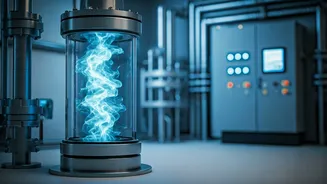
Scientists at the CSIR-National Chemical Laboratory (CSIR-NCL) have achieved a significant milestone by developing an indigenous technology for producing Dimethyl Ether (DME). This innovative process centers on converting methanol into DME using a highly active and cost-efficient catalyst. The research team, under the guidance of Thirumalaiswamy Raja, expertly combined advancements in catalyst chemistry with sophisticated reactor engineering to design an exceptionally efficient production pathway. A key feature of this technology is its ability to produce DME at a pressure of approximately 10 bar. This operating pressure allows for the direct filling of DME into standard LPG cylinders with minimal additional operational costs, streamlining the logistical process. The technology has already been successfully proven at a pilot scale, with a production capacity of 250 kg per day achieved.
Scaling Up and Future Prospects
Building on its successful pilot phase, CSIR-NCL is actively pursuing the scale-up of its DME production technology. The institute is in the process of establishing an industrial demonstration plant with a capacity of 2.5 tonnes per day. This ambitious project is slated for completion within the next six to nine months and is being undertaken in collaboration with a specialized process engineering partner. This demonstration plant is envisioned as a crucial stepping stone towards the establishment of commercial-scale plants, which could subsequently range in capacity from 50 to 100 tonnes per day. To expedite the commercialization process, CSIR-NCL is seeking partnerships with major public sector oil undertakings and bioenergy companies. Widespread adoption of DME is anticipated to bolster India's energy security, significantly diminish its reliance on imported LPG, and contribute to a more sustainable and cleaner energy ecosystem for the nation.