







The Rise of Distillation
The creation of cutting-edge artificial intelligence models involves immense investments in computational power and vast, meticulously assembled datasets.
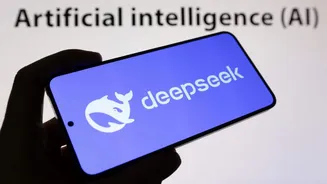
However, a shadowy economic practice has surfaced, allowing rivals to circumvent these substantial costs through a method known as 'distillation.' This week, the often-unseen conflict in the AI sector came into the spotlight when Anthropic, the developer of the Claude chatbot, publicly accused three Chinese AI laboratories—DeepSeek, Moonshot, and MiniMax—of conducting large-scale operations aimed at extracting the core intelligence of its premier model. Distillation essentially acts as an intellectual property theft mechanism, executed through an API. Instead of building a model from the ground up, perpetrators repeatedly query a more advanced 'teacher' model, feeding the resulting high-quality outputs into a smaller, more economical 'student' model. Over time, the student model learns to replicate the teacher's sophisticated reasoning capabilities without the original developer bearing the high initial training expenses. Anthropic's claims indicate that these three labs engaged in over 16 million interactions with Claude, leveraging an extensive network of 24,000 fraudulent accounts to pilfer its advanced coding and reasoning proficiencies. For the AI firms that are targeted, this represents a significant and costly loss of their proprietary assets.
Proxy Networks and Evasion
To successfully carry out a 'distillation' process, attackers require a massive volume of queries. If millions of requests originate from a single server or data center, security systems can readily detect the anomaly and cut off the connection. To bypass these detection measures, the accused Chinese labs allegedly employed 'hydra clusters'—vast networks of accounts routed through commercial residential proxy services. These services enable traffic to appear as though it is originating from millions of distinct, legitimate devices dispersed globally. This infrastructure connects the AI threat to the broader cybercrime ecosystem. A recent analysis by Google's Threat Intelligence team concerning the dismantling of the 'RSOCKS' residential proxy botnet offered a stark illustration of the physical underpinnings of these services. While proxy firms often promote themselves as legitimate tools for tasks like ad verification or SEO monitoring, their networks are frequently constructed using compromised hardware. The Google investigation uncovered that millions of IP addresses sold by such services belong to hacked Internet-of-Things (IoT) devices, including smart refrigerators, routers, and garage door openers. The unsuspecting owners of these devices remained unaware that their internet bandwidth was being exploited to train a foreign AI model. This setup provides the ideal camouflage for model distillers. By cycling their API requests through these 'zombie' residential networks, attackers can make a million data extraction attempts appear as single queries from a million different households. To the AI company's standard security protocols, which heavily rely on IP address reputation scores, this traffic seems entirely authentic, mimicking the random, distributed nature of genuine human online activity and rendering IP blocking an ineffective defense.
Innovative Detection Methods
The dynamics of this technological arms race are continuously evolving. In response to these threats, Anthropic's defense team has shifted its focus from network-level defenses—which proxy services effectively neutralize—to behavioral analysis. They have devised a novel method for identifying distillation not by examining the source of the queries, but by scrutinizing the content of the questions themselves. The core of this breakthrough lies in analyzing the statistical properties of the user prompts. To effectively train a capable 'student' AI model, an attacker cannot simply submit random inquiries. The questions must span a specific, mathematically diverse range of topics to thoroughly capture the full spectrum of the 'teacher' model's knowledge and abilities. This necessity inadvertently creates a unique statistical fingerprint. Anthropic's new detection technique measures the 'conditional probability' of incoming prompts, essentially identifying when a sequence of queries exhibits a mathematical perfection that is improbable for human interaction. Unlike the often erratic and context-dependent interactions of a human user, a distiller's queries follow a distinct pattern meticulously designed to maximize information extraction per unit of text. This strategic pivot signifies a significant advancement in the ongoing efforts to prevent intellectual property theft. It suggests that the effectiveness of commercial proxy networks in facilitating AI distillation may be approaching its limits. If the detection logic operates at the semantic level—analyzing the text and underlying intent rather than the connection origin—the masking of IP addresses becomes irrelevant. An attacker could route their traffic through the most reputable residential proxies available, but if the sequential pattern of their questions betrays a training objective, the system can discreetly flag the account or even feed it corrupted data to undermine the development of the student model.
The Evolving Battleground
Despite the advancements in detection, the market for commercial proxy services continues to thrive. As AI companies implement these sophisticated statistical defenses, distillers are likely to adapt by introducing deliberate randomness into their data collection processes, intentionally making their queries less efficient to better mimic unpredictable human behavior. Meanwhile, proxy firms, positioned at the nexus of this information flow, persist in profiting from the persistent demand for online anonymity. For the broader AI industry, the challenge has transformed from a simple 'whack-a-mole' game of managing IP addresses to a more profound forensic investigation into user intent. This signifies that safeguarding artificial intelligence assets now necessitates a deep understanding of the very mathematical principles that underpin these powerful systems.