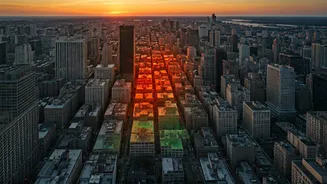







Cool Cities Lab Unveiled
The WRI Ross Centre for Sustainable Cities has introduced the Cool Cities Lab, a pioneering global data platform designed to pinpoint urban heat risks
with unprecedented precision, extending down to individual city blocks and streets. This initiative aims to equip cities with actionable data crucial for effective heat planning, strategic infrastructure investments, and robust climate resilience strategies. Recognizing the escalating threat of extreme heat, which claims nearly half a million lives annually and disrupts urban life, the platform addresses a critical information void faced by many municipalities. By providing a detailed, block-level understanding of heat exposure, it allows urban planners and policymakers to move beyond broad assessments and identify specific areas requiring immediate attention. The platform's development involved close collaboration with city decision-makers, ensuring its practicality and relevance for real-world urban challenges. Its ultimate goal is to empower cities to proactively manage heat risks and safeguard their populations from its detrimental effects.
Granular Data for Action
This innovative, open-source platform currently offers data for over 25 cities across multiple continents, including major metropolises like Jakarta, Boston, Nairobi, London, Rio de Janeiro, and Mexico City, with plans for further expansion. The urgency for such a tool is underscored by recent global temperature records, with 2023, 2024, and 2025 ranking as the three hottest years on record. Extreme heat poses a significant and immediate danger, contributing to a substantial number of deaths each year and impacting public health systems, economic productivity, and daily life. The Cool Cities Lab directly tackles the lack of detailed data that hinders effective local responses. Users can simulate the impact of various cooling interventions, such as planting trees, installing shade structures, or implementing cool roofs, to understand their potential to reduce both ambient temperatures and the perceived heat stress on residents in surrounding areas. The platform's foundation on globally accessible open data ensures its scalability and applicability to cities worldwide, enabling leaders to rigorously test different urban planning scenarios, prioritize the most impactful interventions, and build a strong, evidence-based case for investing in cooling solutions.
Targeted Interventions Showcase
The platform not only highlights areas with the highest heat risk but also identifies the most effective cooling solutions for those specific locations. It enables city leaders to model how interventions like increased tree cover, shade installations, and reflective surfaces can mitigate heat. Early applications of the Cool Cities Lab data have yielded compelling results. In Campinas, Brazil, a modest 20 percent increase in street trees in a residential zone could lead to a temperature drop of 1.7 to 8 degrees Celsius, transforming uncomfortable routes into more pleasant walking paths. Cape Town's central business district could see nearly double the cooling effect by combining street trees with reflective rooftops, compared to using either measure in isolation. Hermosillo, Mexico, has already leveraged the data to plan a new park in a predominantly hot and unshaded area, creating a vital cool refuge. In Atlanta, insights from the platform concerning the efficacy of cool roofs directly influenced the city's 2025 Cool Roof Ordinance, which is projected to reduce citywide temperatures by 1.4 degrees Celsius, with even more significant cooling of up to 3.5 degrees Celsius in its hottest and most vulnerable neighborhoods. These examples demonstrate the tangible benefits of using granular data to drive effective urban cooling strategies.
Empowering Vulnerable Communities
Cool Cities Lab plays a crucial role in identifying which communities are disproportionately affected by extreme heat. Often, these are low-income and densely populated neighborhoods that have limited access to green spaces and natural cooling. By integrating heat exposure data with information on population density and the characteristics of the built environment, the platform provides planners with the tools to prioritize the needs of these most vulnerable groups. This allows for the development of resilience strategies that are context-specific and effectively tailored to the unique challenges faced by different neighborhoods, from a local block level to an entire city. The data empowers leaders to make informed decisions that directly address heat inequities and ensure that cooling solutions reach those who need them most. This granular understanding is essential for building truly equitable and resilient urban environments capable of withstanding the increasing pressures of a warming climate.