





The Myth of Solo Stardom
The popular narrative of the creator economy often centers on individual brilliance and a single stroke of luck, portraying influencers as self-made successes.
However, this overlooks the industrialized reality of content creation. For years, what appeared as spontaneous viral hits was, in fact, a meticulously managed operation. Large-scale creators and media companies employed vast teams of specialized workers, such as video clippers, to transform lengthy content into digestible, shareable snippets, thereby optimizing audience growth through sheer volume. This production pipeline extended far beyond clipping, encompassing roles like video editors, thumbnail designers, and virtual assistants responsible for managing schedules, posting content, and handling administrative tasks, effectively building a robust digital labor infrastructure that fueled the industry's expansion.
Affordable Labor Fuels Growth
The creator economy's rapid ascent was significantly enabled by its ability to tap into an affordable and largely invisible workforce. What often appeared as effortless or spontaneous online presence was, in reality, a product of complex logistical operations supported by efficient production chains. Influencers didn't achieve widespread visibility across platforms like TikTok, Instagram Reels, and YouTube Shorts solely through personal charisma; they benefited from a dedicated team that handled crucial tasks such as editing short clips, resizing videos for different formats, crafting compelling captions, scheduling posts, and maintaining a consistent content output. This symbiotic relationship thrived because the labor involved was economically accessible and typically operated behind the scenes, allowing the primary creator to maintain an image of solo success while their content engine ran smoothly thanks to dedicated digital laborers.
AI Threatens Digital Labor
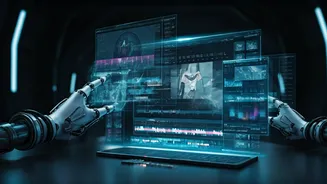
The current paradigm shift sees businesses that previously relied on this extensive human workforce now turning to advanced AI tools. Platforms like OpusClip exemplify this trend, offering the capability to automatically generate short, viral-ready clips from longer videos and distribute them across multiple platforms with minimal human intervention. This technological advancement directly challenges the model of affordable, invisible labor that powered the creator economy's growth. While the operational infrastructure, or 'factory floor,' has long been established, AI is now introducing an element that aims to drastically reduce the human headcount required to maintain this output, signaling a significant disruption for the legions of workers who have been integral to the creator economy's success.
Devaluing Human Input
The impact of AI on jobs within the creator economy isn't typically characterized by sudden mass layoffs; instead, it involves a gradual stripping away of responsibilities and a reduction in the value placed on human input. As AI becomes more sophisticated, human workers are increasingly relegated to roles that involve overseeing and correcting the machine's output. For instance, editors might transition from creating content from scratch to meticulously reviewing AI-generated clips, fixing errors in captions, adjusting timestamps, and repackaging content for various platforms because the AI is not yet perfect. This shift is evident in market trends, with demand for AI video generation and editing services seeing a substantial year-over-year increase of 329%. While human labor isn't entirely eliminated, it is being pushed into a supportive and supervisory capacity, essentially babysitting AI as it learns to perform more of the original tasks.
Global Outsourcing Impacts
The consequences of AI automating creator economy tasks extend far beyond the immediate circle of influencers or freelance editors in major Western cities. The most profound impact is felt in global outsourcing hubs, particularly in regions like Latin America and Asia, where millions are employed in providing remote services. Platforms like Workana have emerged to support workers facing language and market barriers on larger global freelancing sites. When AI begins to streamline and reduce the need for human input in content creation, the fallout will disproportionately affect these remote workers. The same global system that transformed customer support and administrative tasks into tradable digital labor has also fragmented creator work into discrete, repeatable components, sending them to regions where they can be performed quickly and cheaply. Consequently, AI's tightening grip on this labor segment signifies not just a disruption in the creator economy but a significant blow to the promised stability of digital work for a vast global workforce.