
ISRO's Mission Overview
The Indian Space Research Organisation (ISRO) is the space agency of the Government of India. It has a significant role in space-based applications, space exploration,
and the development of related technologies. ISRO's mission is to advance space science and technology and use it for national development. The organization focuses on various activities, including launching satellites, developing launch vehicles, and conducting space research. ISRO's launches provide essential data for weather forecasting, disaster management, and communication. It also plays a key role in scientific missions, like exploring the moon and Mars. ISRO aims to promote technological self-reliance and fosters collaboration with international space agencies. The impact of ISRO's work spans multiple sectors and enhances India's position in the global space community. Its launches have led to groundbreaking advancements. This has made ISRO a crucial player in the space sector.
Launch Vehicle Types
ISRO uses different launch vehicles to put satellites into orbit. The Polar Satellite Launch Vehicle (PSLV) is known for its versatility and reliability. It is often used for launching Earth observation satellites and smaller payloads into various orbits. The Geosynchronous Satellite Launch Vehicle (GSLV) is designed for launching heavier satellites, particularly those meant for geostationary orbit. This is crucial for communication, broadcasting, and navigation. The newer GSLV Mark III, also referred to as the LVM3, has a higher payload capacity. It is capable of launching heavier satellites and even carrying crewed missions. ISRO's ability to develop diverse launch vehicles reflects its technological advancement and the varying needs of its space missions. Each vehicle is made to fulfill specific mission requirements, from the size and weight of the payload to the desired orbit. Continued improvements in launch vehicle technology are vital for ISRO's future space missions.
Impact of Launches
ISRO's launches have had a transformative impact on India's development. Satellite data supports many sectors, including agriculture, disaster management, and environmental monitoring. The launches have allowed for advancements in communication, providing internet and broadcasting services across the nation. They help in remote sensing, which is crucial for studying land, water resources, and climate change. ISRO's achievements have increased India's international standing in space technology and cooperation. They've also helped to develop a strong domestic space industry, with growing participation from private companies. The success of ISRO's launches encourages innovation and the development of new technologies. It benefits India economically by enabling new industries and creating jobs in the space sector. It is a source of national pride, encouraging young people to take interest in science and technology. The ongoing success of ISRO's launches guarantees that India remains at the forefront of space exploration.
Major Mission Successes
ISRO has achieved notable successes in its space program. The Chandrayaan missions to the Moon have provided vital insights into lunar geology and water resources. These missions demonstrate India's capabilities in deep-space exploration. The Mangalyaan (Mars Orbiter Mission) made India the first Asian nation to successfully reach Mars orbit on its first attempt. This mission collected valuable data about the Martian atmosphere and surface. ISRO's launch of multiple satellites in a single mission shows its efficiency and technological competence. The development and deployment of the Indian Regional Navigation Satellite System (IRNSS), also known as NavIC, offers an independent navigation capability for India. These achievements highlight ISRO's dedication to innovation and its contribution to space science. Each successful launch demonstrates ISRO's ability to overcome challenges and achieve complex goals. The successes have motivated the organization to pursue even more ambitious missions and further exploration.
Future Endeavors
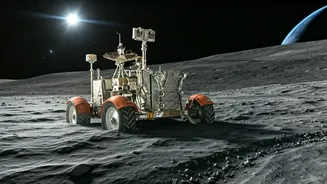
ISRO has ambitious plans for the future. The Gaganyaan mission aims to send Indian astronauts into space. This will demonstrate India's capability for human spaceflight. The development of advanced launch vehicles, such as reusable rockets, is a priority. This is aimed at reducing the costs of space missions. ISRO plans to continue its exploration of the Moon with further Chandrayaan missions, including landing a rover on the lunar surface. Missions to explore the Sun and Venus are also planned, with the goal of gaining a better understanding of our solar system. The organization is encouraging public-private partnerships to increase participation in space activities. ISRO wants to build up its infrastructure and capabilities to meet the growing demands of space exploration. These future endeavors represent ISRO's commitment to pushing the boundaries of space technology and exploration, further solidifying India's position in the global space arena.