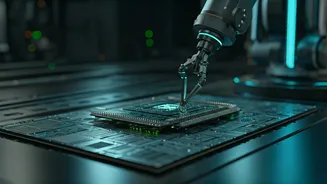








Robots from Shells
Engineers have developed innovative robot parts from a unique source: lobster shells. This remarkable development allows for the creation of robots that
can perform functions such as lifting, gripping, and swimming. The use of lobster shells provides a sustainable and adaptable material for creating diverse and efficient robotic solutions. This advancement represents a significant stride in biomimicry, where technology mimics natural systems.
Expanding Universe's Secrets
Astronomers have gathered new data from telescopes, which deepens the mystery of how fast the universe is expanding. This critical information challenges scientists to rethink existing models and theories. While the universe's expansion rate remains a subject of debate, the ongoing research and advanced technology employed by astronomers allow for continuous observation, analysis, and discovery. Each new observation contributes valuable data to the understanding of the universe's past, present, and future.
Quantum Models on Laptops
A recent breakthrough has provided scientists with a new shortcut, allowing them to run complex quantum models directly on a standard laptop. This innovation streamlines the process, making quantum computing more accessible for research and experimentation. By enabling easier access to these advanced computational tools, researchers can analyze and interpret complex data more efficiently, advancing fields from medicine to materials science.
Solar Systems Formation
The discovery of a misaligned exoplanet presents a challenge to current understanding of solar system formation. Scientists study exoplanets to gain insights into how other solar systems develop. The study of exoplanets also facilitates a greater comprehension of our own solar system's development. This challenges prevailing theories and necessitates further investigation, leading to fresh insights into the processes by which stars and planets come into being.
Indian Dance & Robots
Research suggests that Indian dance mudras may revolutionize the way robotic hand control functions. The precise and intricate gestures, used in traditional Indian dances, may be utilized to develop more intuitive and nuanced control systems for robots. This intriguing link between ancient cultural practices and cutting-edge technology showcases how tradition can inspire future innovations. This research paves the way for advanced robotics that could mimic human movements more accurately.
Synchronized Galaxies' Motion
Astronomers have observed galaxies moving in sync across a vast 50-million-light-year stretch of space. This coordinated movement provides new clues about how galaxies interact with each other and how they evolve over cosmic timescales. Observing how galaxies are interconnected sheds light on the influence of gravity, dark matter, and other cosmic forces. These observations enhance the understanding of the large-scale structure of the universe and the dynamic interactions within it.
Glacier Behavior Patterns
New global mapping has revealed that glaciers speed up in the summer and slow down during the winter months. This seasonal pattern is crucial for comprehending how glaciers contribute to sea level rise and how they respond to climate change. Scientists study these patterns to improve climate models and predict the potential impact of melting glaciers on global ecosystems. This data provides valuable insights into the ongoing effects of climate change.