







The Buffet Dilemma
In the bustling tech hub of Bengaluru, a unique blend of engineering prowess and everyday life has emerged with the creation of 'BuffetGPT'. This innovative
AI agent, developed by an engineer named Pankaj, aims to tackle a perennial challenge faced at grand Indian weddings: the overwhelming array of dishes and the limited capacity of one's stomach. The inspiration struck from the common post-meal regret of having missed out on the best items or overindulging in less significant ones. Pankaj's system approaches the wedding buffet with the same analytical rigor as an AI tackling a complex data problem, focusing on analysis, prioritization, and optimized outcomes to ensure guests enjoy their culinary journey.
AI's Buffet Analysis
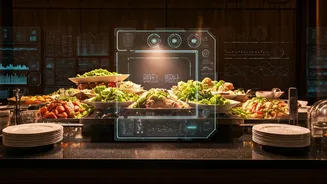
BuffetGPT's operational framework begins with a visual reconnaissance of the buffet spread, meticulously identifying each dish. It transcends a simple categorization of 'food' by segmenting items into 'high-value' – those that are special, unique to the occasion, or rarely available – and 'filler foods', which are commonly found at home or strategically placed to induce satiety quickly. This intelligent classification is the first step in Pankaj's strategy. For instance, a sample analysis from a wedding in Ahmedabad showcased how the system treats the stomach as a finite resource, allocating approximately 50% of its capacity to main courses and curries, a modest 15% to breads and accompaniments, and a generous 35% to desserts. This allocation prioritizes the unique and often elaborate sweet offerings characteristic of Indian weddings.
Strategic Eating Plan
Following the analysis and allocation, BuffetGPT formulates an execution strategy, offering a methodical step-by-step plan. Dishes like Hyderabadi biryani are flagged as 'first targets' due to their tendency to deplete quickly and the time required for replenishment, especially meat-based preparations. Conversely, the system advises passing on items such as dal makhani and mixed vegetables, arguing that their widespread availability and strategic placement early in the buffet line are designed to fill guests prematurely. The AI also considers the physiological impact of certain foods; it notes that kadhi pakoda expands significantly in the stomach, while raita, due to its high water content, can create a deceptive feeling of fullness. Intriguingly, the agent suggests consuming buttermilk before dessert, positing that it can help create additional space for the sweet courses.
Dessert Prioritization
When it comes to the grand finale of desserts, BuffetGPT employs an 'opportunity cost' evaluation. It champions selecting richer, denser options like rasmalai over kheer, which is often replicable at home. Ghewar also receives a special endorsement, with the AI highlighting that desserts placed further from the entrance typically have shorter queues, and the brief walk aids digestion. Ultimately, BuffetGPT categorizes dishes into actionable groups: 'must try,' 'small portions,' and 'skip.' Biryani, ghewar, and rasmalai are prime candidates for the 'must-try' list, while simple steamed rice and dal makhani are firmly relegated to the 'avoid' category, ensuring a curated and satisfying end to the meal.
Online Reception
The ingenious concept of BuffetGPT has predictably ignited a lively discussion across the internet, eliciting a spectrum of reactions from admiration to playful skepticism. Many users expressed their delight, humorously remarking that Pankaj had developed a tool they never realized they needed, while others mused about future possibilities, such as drone-assisted buffet scanning. However, not all responses were laudatory; some commenters dryly suggested it was a solution to a non-existent problem. Regardless of whether it's viewed as pure genius or an amusing gimmick, BuffetGPT has undeniably demonstrated that in Bengaluru, even the art of assembling a wedding buffet can be approached with the precision and optimization of algorithms.