




Analyzing Distant Worlds
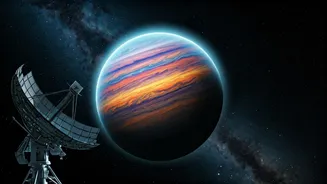
The vastness of space has always captured our imaginations. Today, astronomers use advanced technology to study exoplanets, which are planets located outside
our solar system. The primary method involves analyzing the light that passes through their atmospheres. This light carries vital information about the gases present. By examining the spectra of light, scientists can detect the unique fingerprints of elements and molecules, providing clues about the atmospheric composition. This is a complex undertaking, requiring sophisticated telescopes and analytical tools, but the potential reward—evidence of life beyond Earth—makes it a compelling endeavor.
Looking for Biosignatures
Within an exoplanet's atmosphere, scientists search for 'biosignatures' – evidence of life. These are specific gases or combinations of gases that are unlikely to exist in such quantities without biological processes. One key biosignature is the presence of oxygen, similar to Earth’s atmosphere, generated by photosynthetic organisms. Other potential biosignatures include methane, nitrous oxide, and certain combinations of gases that hint at complex biological activity. The detection of these biosignatures, or even anomalies in atmospheric chemistry, could offer compelling evidence of life on another world. This is not a simple task; it requires extremely sensitive instruments and careful analysis to differentiate between biotic and abiotic sources of the gases.
Powerful Telescopes' Role
Detecting biosignatures hinges on cutting-edge telescope technology. Space-based telescopes, in particular, offer a significant advantage, as they are not hindered by Earth’s atmosphere. Telescopes like the James Webb Space Telescope are specifically designed to analyze the light from exoplanets, identifying the chemical composition of their atmospheres. These powerful instruments can gather data from faint signals, allowing for detailed spectral analysis. Moreover, upcoming telescopes are being developed with even greater sensitivity. These future observatories will play a pivotal role in the search for biosignatures, providing a more comprehensive understanding of exoplanet atmospheres and increasing the likelihood of discovering extraterrestrial life.
Challenges and Future Prospects
Despite the remarkable advancements, numerous challenges are involved in detecting alien life. Exoplanets are incredibly distant and often difficult to observe. The faintness of the light signals and the interference from starlight pose significant difficulties. Moreover, scientists must consider potential false positives; that is, scenarios where non-biological processes can mimic biosignatures. Thus, the search for life requires extremely meticulous data analysis and a strong understanding of planetary science. Nevertheless, the future of this research is bright. As technology advances and new telescopes come online, scientists will be better equipped to study exoplanets, unveiling clues to the existence of life beyond our planet. The continuous expansion of our knowledge will bring us closer to the ultimate discovery – evidence of life elsewhere in the cosmos.