








Expanding Launch Capacity
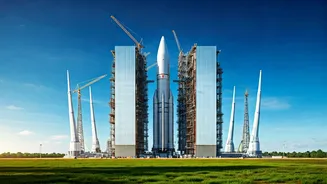
The Indian Space Research Organisation (ISRO) is planning to build its third launch pad at Sriharikota, a crucial step in boosting the nation's space capabilities.
The decision reflects ISRO's commitment to accommodate the increasing demand for satellite launches, both for national and international clients. By adding a new launch site, ISRO aims to streamline the launch process and reduce potential delays, thus increasing the frequency of missions. This expansion indicates a strategic move to fortify India's position in the global space market and support its ambitious space exploration programs. The project, slated for completion within four years, underscores ISRO's forward-thinking approach to meet future demands in the space sector.
Supporting Heavier Satellites
One of the primary goals of the third launch pad is to facilitate the launch of heavier satellites. This move is significant because it will allow ISRO to deploy more advanced and complex satellites into orbit. These satellites often carry sophisticated payloads with applications that range from advanced Earth observation to cutting-edge telecommunications. Launching heavier satellites also means ISRO can support future missions involving larger spacecraft. This enhancement in capacity underscores India's dedication to developing cutting-edge technology and its goal of becoming a key player in the global space arena. This increased capacity aligns with India's long-term strategic objectives in areas like national security, disaster management, and environmental monitoring, making the project a multifaceted national asset.
Strategic Sriharikota Location
Sriharikota, already the primary launch site for ISRO, benefits from its geographic location. Its position on the eastern coast of India provides advantages for launching satellites into various orbits. The new launch pad at Sriharikota will build upon existing infrastructure, including launch control centers, telemetry tracking stations, and logistics networks, which are crucial for the seamless execution of space missions. This strategic choice ensures operational efficiency and synergy with existing facilities. The concentration of resources at Sriharikota streamlines logistics and support services, lowering the operational costs and increasing the reliability of missions. Furthermore, the selection of Sriharikota underscores the importance of this facility in India's space program and its continued growth.
Boosting Future Missions
The third launch pad is crucial for supporting ISRO's ambitious plans, including missions to the Moon, Mars, and beyond. This infrastructure expansion is essential for launching the larger spacecraft required for these future explorations. ISRO's sustained investment in infrastructure development highlights its long-term vision and commitment to scientific advancement. This forward-looking strategy ensures ISRO remains a key player in global space exploration. The new facility will allow India to take on more complex and challenging space missions, which promotes innovation and technological progress. This growth also benefits India's domestic industries and promotes international collaborations, bolstering its place in the global space community.
Economic and Technological Impact
The construction of the third launch pad will significantly impact both the economy and technological advancements in India. The project will generate employment opportunities, encouraging the growth of supporting industries, and creating jobs directly and indirectly related to space activities. This boost will stimulate technological innovations across various sectors, ranging from engineering to materials science. ISRO's progress enhances India’s reputation on a worldwide scale, drawing international collaborations and investments. Through sustained space program investment, India increases its presence in the global arena. These benefits underscore the importance of space programs as key drivers for economic development and technological growth.