







Next-Gen AI Processing
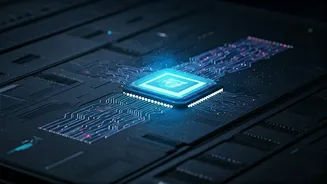
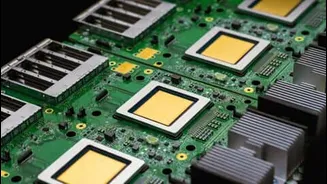
At a recent Google Cloud Next event, the tech giant pulled back the curtain on its groundbreaking eighth generation of Tensor Processing Units (TPUs).
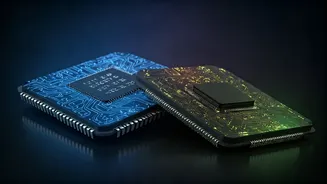
This latest iteration includes two distinct chips, the TPU 8t and the TPU 8i, which are engineered to serve as the powerful backbone for Google's custom-built supercomputing infrastructure. The primary objective behind these advanced chips is to equip artificial intelligence agents with enhanced cognitive abilities. This means AI will be better prepared to engage in sophisticated reasoning, formulate strategic plans, and execute intricate multi-step workflows with greater autonomy and efficiency. The introduction of these TPUs marks a significant leap forward in how AI systems can understand and interact with complex tasks, moving beyond simple command execution to more intelligent, agent-like behaviors.
Accelerating Model Development
A key highlight of the new TPU generation is its profound impact on the speed of developing frontier AI models. Google has stated that the TPU 8t, in particular, possesses the capability to dramatically shorten the development cycle for these sophisticated models. What previously might have taken several months of intensive work can now potentially be achieved in a matter of weeks. This accelerated pace is crucial for staying at the forefront of AI research and deployment, allowing for faster iteration, experimentation, and the quicker realization of advanced AI capabilities across various applications. The efficiency gains offered by these chips are expected to democratize access to powerful AI development tools and foster innovation at an unprecedented rate.