







Bionic Enhancements Takeover
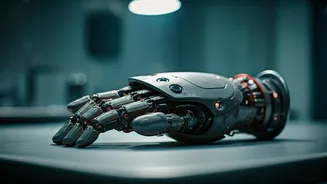
The first area of technological advancement is bionic enhancements. Imagine limbs that move with thought, and skin that can feel textures and temperatures.
Prosthetics have advanced far beyond their original state, incorporating advanced materials and microelectronics to recreate the function of lost limbs. Companies are also working on sensory enhancements, integrating touch and vision directly with the nervous system. The potential implications are massive, from helping people with disabilities regain mobility and sensation to creating super-human abilities. For example, people with amputations can already control robotic arms with their thoughts and feel the textures of objects they are touching, with some devices even linking directly to the brain to send sensory data.
Brain-Computer Interfaces Unveiled
Next on the list are brain-computer interfaces (BCIs). BCIs offer a direct line of communication between the human brain and external devices. Researchers are developing non-invasive methods, such as EEG (electroencephalography), and more advanced, invasive techniques using implanted electrodes. These interfaces have incredible possibilities, including enabling paralyzed individuals to control computers, or moving wheelchairs, with their minds, and even restoring lost functions. BCIs are also being explored for cognitive enhancement, memory augmentation, and the treatment of neurological disorders. Scientists are working on ways to improve the speed, accuracy, and reliability of BCIs, opening doors to a new era of human-computer interaction and therapeutic interventions. Think of it as a direct link, allowing the brain to communicate directly with machines.
Lab-Grown Organs Emerging
The field of regenerative medicine is experiencing an incredible transformation with the development of lab-grown organs. Scientists are making significant advances in growing functional organs, such as livers, kidneys, and hearts, in the lab using stem cells, or 3D printing techniques. These organs are designed to replace damaged or diseased ones, eliminating the need for organ donors and reducing the risk of rejection. The process involves creating a scaffold structure and then seeding it with cells. While still in early stages, the potential to create patient-specific organs to transplant is revolutionary. This development has the potential to eliminate the need for organ donors, potentially saving thousands of lives and transforming healthcare forever.
Space Elevators Ascending
Space elevators are a concept that has long been a staple of science fiction, but are gradually getting closer to becoming reality. These structures, built from Earth to space, would provide a more efficient and cost-effective means of transporting materials and people into orbit. Though engineering challenges abound, research is focused on developing the super-strong materials needed for the cable, like carbon nanotubes, and designing a system that can withstand extreme conditions. If a successful space elevator is created, it would bring about a new era of space exploration and development. This would not only make space travel safer but would also bring down the cost substantially, opening up space exploration to new ventures.
Self-Healing Materials Progress
Materials that repair themselves are another exciting area of development. Scientists are creating materials capable of mending damage autonomously, similar to how the human body heals. These materials can be created in several ways, like incorporating microcapsules filled with healing agents that are released when the material is damaged. The applications are extensive, from self-healing infrastructure, such as bridges and buildings, to aircraft and spacecraft that can repair themselves in flight. Such technologies have the capacity to make products more durable, reduce maintenance costs, and extend the lifespan of various objects. Imagine cars that can fix their own dents and scratches, or bridges that can automatically repair cracks.
Artificial Intelligence Flourishes
The continuous evolution of artificial intelligence (AI) has brought about machines that are capable of complex tasks and are no longer restricted to the realm of science fiction. Deep learning, natural language processing, and other AI techniques are being employed in various areas, from healthcare and finance to transportation and entertainment. Self-driving cars, AI-powered diagnostic tools, and virtual assistants are all becoming more prominent. As AI continues to evolve, the boundaries of what machines can achieve become more and more indistinct. The creation of strong AI, with human-level intelligence, remains a challenge, but the progress continues at a remarkable rate, redefining the capabilities of machines and their interaction with the world.
Virtual Reality Expansion
Virtual reality (VR) is becoming more immersive and accessible, moving beyond games and into new areas. Advanced VR headsets and augmented reality (AR) systems are being used for training, design, healthcare, and education. VR allows users to experience realistic simulations and interact with virtual environments, while AR overlays digital information onto the real world. These technologies are being utilized for surgical training, product design, and remote collaboration. As the technology continues to develop, expect VR and AR to become increasingly integrated into our daily lives, transforming how we work, learn, and entertain ourselves. VR and AR are helping to bridge the gap between physical and digital worlds, creating new ways for us to learn, create, and communicate.
Advanced Robotics Revolution
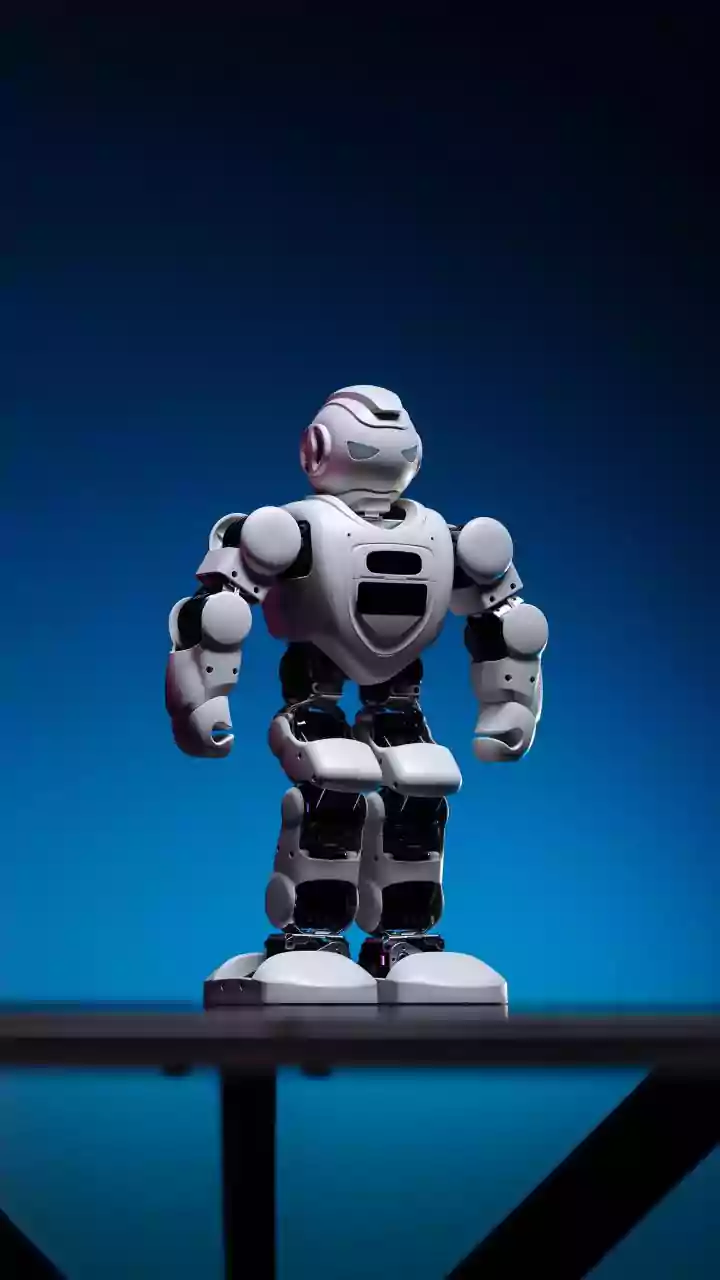
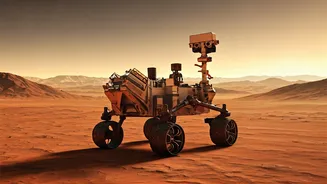
Robotics is experiencing a boom with advanced designs, expanding capabilities, and the integration of AI. Robots are evolving to be more autonomous, adaptable, and capable of performing a wide range of tasks, including complex manufacturing processes, surgery, exploration, and domestic services. Robots now can function alongside people, sharing space and interacting naturally, which can assist in more dangerous tasks or free up humans. From robots that can navigate complex terrains to ones that can learn and adapt to changing environments, the advancements in robotics are reshaping several industries. Expect robotics to play a more significant role in the future, improving efficiency, safety, and quality of life.