






AI's Impact on IBM
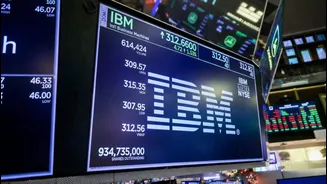
In a dramatic turn of events, IBM's stock experienced its most substantial single-day decline in over a quarter of a century. This significant market reaction
was triggered by an announcement from Anthropic, an artificial intelligence firm. Anthropic revealed that its specialized AI tool, Claude Code, possesses the capability to interpret and modernize COBOL code. This development directly threatens a foundational aspect of IBM's mainframe business, a sector where the company has long held a dominant position. The market's response underscores investor concerns about the potential disruption AI technologies could bring to established enterprise software and IT service economics. Consequently, IBM's share price plummeted, reflecting a reassessment of the company's long-term prospects in the face of rapidly advancing AI capabilities that could automate traditionally lucrative services.
Understanding COBOL's Role
COBOL, an acronym for Common Business-Oriented Language, is a programming language that emerged in the late 1950s. Despite its age, COBOL remains intricately woven into the fabric of global financial, insurance, and governmental infrastructures. IBM has built a substantial business around its mainframe systems, which are meticulously designed for handling massive transaction volumes, and COBOL is the cornerstone of these operations. It's estimated that approximately 95% of ATM transactions within the United States still depend on systems written in COBOL, a testament to its enduring prevalence and the sheer scale of its deployment. The challenge with COBOL lies in its complexity and the dwindling number of developers proficient in its nuances, making modernization a costly and time-consuming endeavor historically.
Anthropic's Claude Code Solution
Anthropic's Claude Code has presented a compelling solution to the long-standing challenge of COBOL modernization. The AI tool is designed to analyze vast repositories of COBOL code, meticulously tracing dependencies across potentially thousands of lines. It can also generate comprehensive documentation for intricate workflows that may have lost clarity over time due to a lack of original expertise. Furthermore, Claude Code is capable of identifying potential risks within legacy systems that would typically require months of laborious manual inspection. Anthropic's core argument is that AI fundamentally alters the cost-benefit analysis of legacy code modernization, making it economically viable where it was once prohibitive. The company suggests that what previously took years of effort can now be accomplished in a matter of quarters, a claim that has understandably alarmed investors in companies like IBM, whose revenue streams are tied to these modernization projects.
Broader Industry Implications
The market's reaction to Anthropic's announcement extends beyond IBM, highlighting a broader shift in investor sentiment across the software and IT services sectors. There's a palpable anxiety as AI tools transition from experimental phases to real-world applications, prompting a reevaluation of how such technologies might impact traditional consulting and integration services. The concern is that AI-driven automation could exert significant downward pressure on pricing and service volumes. This sentiment is not confined to the US; the Indian IT industry, a major global player, is also grappling with similar questions about whether AI might reduce the need for extensive human workforces in large-scale projects. While some industry leaders advocate for a more optimistic view, suggesting AI will create new opportunities, others, like former Infosys CEO Vishal Sikka, have issued stark warnings about the real and immediate disruption generative AI brings to knowledge work and project execution, especially in areas like code migration and system integration.