



Trees' Cooling Impact
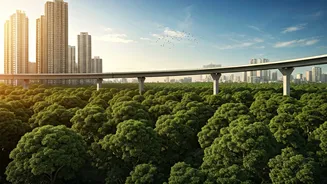
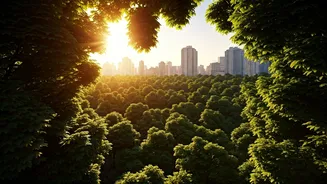
Trees play a crucial role in moderating the excessive heat generated in urban environments by structures like pavements and buildings. Globally, tree cover
successfully counteracts approximately half of the additional heat experienced in cities. Through providing shade and releasing water vapor, trees collectively lower average city temperatures by about 0.15°C. Without these natural cooling agents, cities would face twice the rate of warming due to the urban heat island phenomenon, where dark surfaces absorb and retain heat. This human-induced warming is separate from the broader issue of climate change driven by fossil fuel consumption. Researchers meticulously analyzed temperature data from nearly 9,000 large cities, examining 150 distinct areas within each city. This granular approach ensures that the cooling benefits are accurately attributed to local tree cover, preventing, for example, trees in a large park from being credited for cooling distant, heavily built-up neighborhoods.
Unequal Cooling Distribution
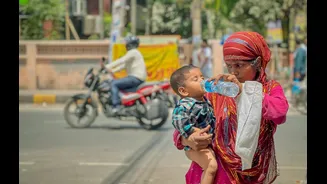
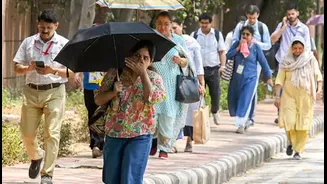
While trees provide substantial temperature relief in many urban areas, the benefits are not evenly distributed. A significant portion of residents in 31 major cities already experience an average cooling effect of at least 0.3°C from tree cover. However, the study's lead author, Rob McDonald, points out a critical issue: hotter and poorer urban centers, which are most vulnerable to dangerous heat waves, receive considerably less relief. Extreme heat poses serious health risks, including confusion, organ failure, and cardiovascular strain. The research team employed a sophisticated methodology, integrating weather station readings, satellite imagery, and computer modeling to quantify the cooling provided by trees. Worryingly, in 20 cities, residents benefit from less than a mere five-hundredths of a degree Celsius of cooling from their urban trees. In places like Dakar, Senegal; Jeddah, Saudi Arabia; Kuwait City, and Amman, Jordan, the scarcity of trees means the inhabitants essentially receive no cooling benefits from this natural source.
Wealth and Tree Cover
A stark contrast emerges when comparing wealthy and poorer nations regarding urban tree cover and its associated cooling effects. Nearly half of the cities in affluent countries benefit from tree cover that cools by at least 0.25°C. Conversely, this level of cooling is experienced by fewer than 10% of cities in the poorest nations. Cities like Berlin, Atlanta, Moscow, Seattle, Sydney, and Washington, D.C., top the list for significant cooling, largely due to their extensive tree canopies. For instance, Atlanta boasts tree cover across 64% of its land area. Experts suggest that wealthier areas in North America often have larger land parcels and residents with greater political influence, both contributing to more substantial tree coverage. This disparity highlights a clear inequality in the distribution of essential green infrastructure and its health benefits. While every bit of cooling helps, particularly in regions where water is scarce and trees are difficult to maintain, the current distribution leaves many of the most vulnerable populations exposed.
Future Strategies and Limitations
As urban populations continue to grow, with up to 75% of humanity expected to reside in cities, the moderating influence of urban vegetation becomes increasingly vital for human well-being. The study's authors emphasize that cities, particularly those that are both poorer and hotter, have the capacity and the imperative to increase their tree cover. However, implementing widespread tree planting initiatives faces significant hurdles, including limited water availability, scarcity of suitable land, and the need for proper species selection. Compounding these challenges is the ongoing trend of climate change, which exacerbates heat conditions. Even with dedicated efforts, the researchers estimate that cities can, at best, mitigate future urban heating by only 20%. It is crucial to understand that trees, while beneficial, are not a singular solution to climate change; they cannot entirely counteract the warming predicted by climate scenarios for the future, which point towards a significantly hotter world.