







AI's Rapid Rural Deployment
Nandan Nilekani, a co-founder of Infosys, recently shared insights into India's accelerated journey of integrating Artificial Intelligence, particularly
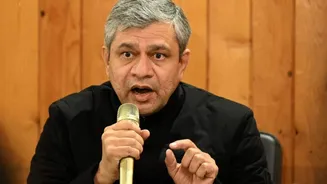
focusing on its application within the agricultural sector. Speaking at a CEO roundtable, Nilekani emphasized the nation's rapid transition from theoretical AI concepts to practical, real-world implementations. He lauded Prime Minister Narendra Modi's leadership for championing a national strategy that prioritizes AI adoption, aiming to directly benefit ordinary citizens. Nilekani pointed out the 'exceptional speed' at which technological projects are now being deployed across India, noting that many initiatives move from initial ideas to nationwide implementation within mere weeks. This rapid pace signifies a significant shift in how technology is being leveraged to address critical societal needs and economic development.
Modi's Vision for Cattle
A pivotal moment in this AI push occurred on January 8th, when Nandan Nilekani met with Prime Minister Modi. Their discussion initially centered on applying AI to enhance crop management for farmers. However, the Prime Minister expanded the scope, posing a question that underscored a deeper understanding of rural challenges: "why can't we apply it to cows and cattle?" Modi elaborated on the difficulty of diagnosing illness in livestock, as animals cannot verbally communicate their ailments. This insightful query spurred a new direction, prompting the exploration of AI solutions for animal health. The Prime Minister's forward-thinking approach highlighted a commitment to leveraging technology for even the most fundamental aspects of the agricultural economy, demonstrating a comprehensive vision for AI's impact.
Amul's AI Success Story
Following the Prime Minister's directive to extend AI to the dairy sector, a swift and coordinated effort was launched. The Prime Minister's Office (PMO), the Ministry of Electronics and Information Technology (MeitY), and Amul, India's largest dairy cooperative, collaborated seamlessly. This joint initiative resulted in the development and deployment of an AI-based health-monitoring solution for cattle. Remarkably, this system was launched on February 11th, a mere 21 days after the initial discussion about applying AI to cattle health. The system has since been implemented on a massive scale, now impacting 3.6 million farmers and monitoring a herd of 40 million cattle. This rapid and extensive deployment exemplifies how AI can deliver tangible, measurable benefits to a vast population efficiently.
Data Sovereignty and Global Leadership
Nilekani also highlighted the strategic significance of 'sovereign design' in India's AI initiatives, emphasizing that data generated by cooperatives like Amul remains within India's borders and under the organization's direct control. This principle of data sovereignty is crucial for building public trust and ensuring that technological advancements serve national interests. He expressed a strong conviction that India's model of 'AI diffusion,' characterized by its emphasis on public benefit, trust, and coordinated execution, is poised to become a global benchmark for improving lives, especially in developing nations. Nilekani predicts that numerous additional AI applications will emerge, positioning India as a world leader in demonstrating how AI can enhance the lives of common individuals, including farmers, students, and patients.