





Charging Heat Intensity
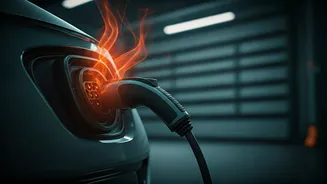
An examination of a recent real-world test on advanced electric vehicle charging technology revealed a striking temperature of 169.6°F registered by the
battery during a charging session. This figure significantly surpasses the recommended safety threshold of 149°F for lithium iron phosphate battery cells, a standard prevalent in China. The livestreamed test, conducted by an automotive blogger, has sparked crucial discussions and raised questions regarding the long-term effects of such intense heat on battery health. It highlights a growing concern within the EV community: does the drive for ultra-fast charging come at the cost of battery degradation over time?
Temperature's Impact
Under typical operational conditions, electric vehicle battery cells function optimally within a temperature range of 68°F to 86°F. Most vehicles are programmed to issue overheating alerts when temperatures climb above 140°F. The extreme temperatures observed during the aforementioned test, however, place considerable strain on the Solid Electrolyte Interphase (SEI) layer. This crucial protective barrier, essential for isolating the electrolyte from the anode while enabling ion flow, can begin to break down at temperatures exceeding 158°F. Experts suggest that repeated exposure to such elevated thermal conditions could potentially accelerate the natural wear and tear of the battery, impacting its overall lifespan and performance over extended use.
Manufacturer Responses
In anticipation of potential scrutiny regarding battery performance under demanding charging conditions, manufacturers are taking proactive steps. For instance, one company highlighted a lifetime warranty on its battery cells when introducing its second-generation battery pack, emphasizing an improved capacity retention standard by 2.5% compared to its predecessor. To underscore the robustness of their technology, a demonstration involved deliberately short-circuiting four battery cells and leaving them in that state for a full 24 hours without any resulting fire or explosion. These efforts aim to build consumer confidence by showcasing the durability and safety measures integrated into their advanced battery systems.
Industry Race
The pursuit of faster electric vehicle charging is a competitive landscape, with numerous manufacturers pushing boundaries. While a particular company's technology may currently exceed the charging speeds of some established automakers, including Tesla, Porsche, Hyundai, and Lucid, it's important to note that competitors, particularly within China, are also developing advanced battery platforms. Companies like CATL and Geely are reportedly engineering battery systems capable of charging rates that surpass current megawatt charging capabilities. This intense innovation highlights an industry-wide drive to reduce charging times, making the management of heat generated during rapid charging a critical area of focus, just as significant as the speed itself for ensuring battery longevity.