






AI's Codewriting Prowess
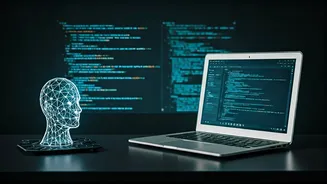
The world of software development is undergoing a seismic shift, with artificial intelligence now taking the reins in code generation. Airbnb's Chief Executive
Officer, Brian Chesky, has disclosed a remarkable achievement: AI is currently responsible for producing a staggering 60% of the company's codebase. This represents a monumental leap in the integration of AI into core engineering processes. Previously, tasks that required the dedicated effort of a substantial team of engineers are now being handled with unprecedented speed and efficiency by AI algorithms. This advancement signifies not just an improvement in task completion but a fundamental redefinition of the engineering workflow. The implications are far-reaching, suggesting a future where AI acts as a powerful co-pilot, augmenting human capabilities and accelerating innovation at an extraordinary pace. This move by Airbnb highlights a broader trend across the tech industry, where businesses are increasingly exploring and implementing AI solutions to optimize their operations and gain a competitive edge.
Engineering Team Evolution
The transformative impact of AI on code generation directly reshapes the landscape for engineering teams. Chesky's statement indicates that a task previously necessitating a team of twenty engineers can now be accomplished with a significantly smaller human contingent, thanks to AI's contributions. This doesn't necessarily imply a reduction in the need for engineers but rather a significant upskilling and a shift in focus. Instead of spending their time on repetitive coding tasks, engineers can now dedicate their expertise to more complex problem-solving, architectural design, strategic planning, and innovation. The role of the human engineer is evolving from a primary coder to a supervisor, architect, and innovator who guides and validates the AI's output. This evolution allows for a more efficient allocation of human talent, tackling more challenging and creative aspects of software development that require human intuition, critical thinking, and domain expertise. The partnership between humans and AI promises to unlock new levels of productivity and foster a more dynamic and responsive development environment.