



AI Gets Hands-On
Anthropic has unveiled a significant advancement for its AI chatbot, Claude, granting it the unprecedented ability to interact directly with a user's computer.
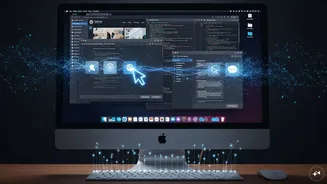
This innovative feature allows Claude to operate your mouse and keyboard, effectively taking control of your desktop to execute a wide array of tasks. The primary aim behind this integration is to automate routine desktop operations and optimize user workflows by enabling Claude to autonomously perform commands and navigate through various applications. This development marks a pivotal moment in the evolution of AI assistants, moving them from passive information providers to active participants in managing and manipulating digital spaces. Although specific implementation details and the robust security protocols safeguarding this powerful functionality are still being elaborated upon, the mere prospect of an AI interface capable of controlling a computer opens up a vast landscape of opportunities for enhanced productivity and sophisticated automation. Users can anticipate the possibility of delegating time-consuming or intricate tasks to Claude, thereby freeing up their valuable time for more strategic and creative endeavors. Concurrently, this advancement naturally sparks important discussions regarding user autonomy, data privacy, and the potential for unintended or malicious use, issues that will undoubtedly be addressed as this cutting-edge feature becomes more widely accessible.
Preview and Platforms
This powerful new Computer Use capability from Anthropic is presently accessible as a research preview, specifically within the Claude Cowork and Claude Code environments. With this experimental access, Claude can now initiate browser sessions, launch various applications, and efficiently populate spreadsheet data. Initially, this feature is designed to function exclusively on macOS. However, Anthropic has stated its intention to extend compatibility to Windows operating systems within the upcoming weeks, broadening its reach. A key aspect of Claude's Computer Use is its versatility, as it operates seamlessly with both contemporary connected applications and older, legacy software through a dedicated virtual keyboard and mouse interface. The AI also possesses the capacity to interpret on-screen content by processing screenshots, enabling it to understand and respond to the visual elements of the user's desktop.
Mechanism and Use Cases
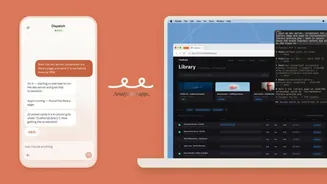
The core of this new functionality relies on agentic AI principles, allowing Claude to not only work with applications that have direct integration but also to interface with legacy software. This is achieved through a sophisticated system involving a virtual mouse and keyboard, along with the ability to read screen content via screenshot analysis. The official announcement on X (formerly Twitter) by Claude's handle highlighted this new level of autonomous task completion on PCs. While comprehensive technical specifications remain undisclosed, this Computer Use feature can be viewed as an extension of the recently introduced Claude Dispatch, a tool that allows remote control of Claude on one's computer. Current use cases that have been highlighted include opening applications, navigating web browsers, and interacting with productivity suites like spreadsheets and document editors. Initially, Claude will prioritize utilizing connected applications such as Slack, Calendar, and other integrated platforms. If no suitable connected app is available for a given task, Claude will seek explicit user permission before launching and operating a legacy application directly on the screen.
Future Potential and Pace
Felix Rieseberg, a Member of Technical Staff at Anthropic, has indicated that this feature will prove particularly valuable when combined with Dispatch. This synergy will enable users not only to control Claude on their desktop from a mobile device but also to delegate complex tasks for autonomous completion. However, Rieseberg also cautioned that as this represents an early implementation of a novel technology, Claude's execution speed for these computer-controlled tasks will currently be slower than that of a human operator. Nonetheless, future iterations of this capability are expected to significantly enhance both the speed and the scope of tasks Claude can manage, paving the way for more profound levels of AI-driven automation and user assistance.