



The Coder's Reluctance
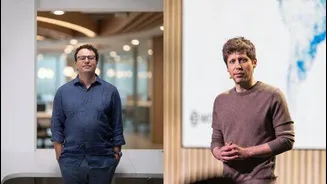
OpenAI's chairman, Bret Taylor, has openly admitted to experiencing a significant emotional hurdle in his professional evolution towards overseeing advanced
AI coding agents. While he acknowledges the necessity of moving away from personally writing code, he describes it as a difficult and poignant transition. Taylor expressed a deep-seated care for the intricacies of code construction, noting that relinquishing this aspect of his work feels like a personal loss. He is actively working to detach himself from the meticulous craft of coding, recognizing that clinging too tightly to this traditional skill set might hinder his growth as a software engineer in an AI-dominated future. This sentiment highlights the personal conflict many seasoned developers might face as their roles transform due to sophisticated AI tools.
Industry's AI Shift
Taylor's personal reflections are indicative of a larger, industry-wide transformation driven by AI's increasing capabilities in software development. The advent of AI-powered coding assistants is fundamentally altering the landscape for software engineers. Similar sentiments have been voiced by other prominent figures; for instance, Boris Cherny, the creator of Anthropic's Claude code, has suggested that AI tools have reached a point where they can 'practically solve' the coding challenge. Complementing this perspective, David Heinemeier Hansson, the architect of Ruby on Rails, has drawn parallels between manual coding and artisanal crafts like saddlemaking. He posits that while these skills hold personal value and can be pursued for satisfaction, they are no longer the central pillars of mainstream production in an era dominated by more efficient, automated methods.
The Rise of Agentic AI
OpenAI's concentrated effort in developing agentic AI for coding tasks underscores a prevailing industry trajectory where automation is progressively taking over traditional coding responsibilities. Taylor, while recognizing the utility of tools like Codex, remains uncertain about the ultimate configuration of integrated development environments in this evolving era. He humorously alluded to the concept of creating 'bespoke artisanal code,' yet conceded that coding had previously constituted his 'entire life.' He is still navigating how the value of craftsmanship will be preserved and redefined in the age of artificial intelligence, grappling with the future role of human ingenuity in a landscape increasingly shaped by AI's prowess. This ongoing exploration points to a future where the definition of a software engineer may be significantly reimagined.