







The Thermal Runaway Chain
Electric vehicle battery fires are often triggered by a phenomenon known as thermal runaway. Lithium-ion batteries, fundamental to EVs, are essentially
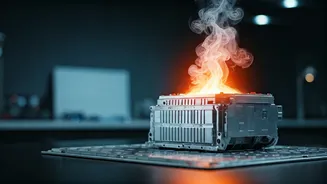
collections of thousands of individual cells. These cells generate heat during the charging and discharging cycles, a normal operational aspect. A sophisticated system, the battery management system (BMS), usually maintains operational temperatures within safe parameters. However, if a fault occurs, one cell can overheat. This excessive heat then propagates to adjacent cells, initiating a cascading chain reaction. The cooling systems designed to manage this heat can be overwhelmed by the speed and intensity of this reaction. This uncontrolled heating not only poses a fire risk but also releases a potent mix of hazardous gases, including hydrogen fluoride, which can create a flammable vapor, thereby facilitating the ignition of a fire and making the 'path' for flames much easier to establish.
Impacts and Charging Risks
Physical damage to the battery pack is another significant contributor to EV fires. Manufacturers construct battery casings from robust materials like reinforced steel or aluminum to shield the delicate internal cells. Nevertheless, severe impacts, particularly those affecting the vehicle's undercarriage, can deform this protective shell. Such deformation can lead to punctures or internal distortion of the cells, potentially causing short circuits. Overcharging is also a critical concern. Pushing a battery beyond its specified charging capacity can lead to an uneven buildup of charge within the cells. While legitimate EV manufacturers integrate safeguards into their charging systems to prevent this, using third-party or damaged chargers might bypass these crucial limitations. Consistent overnight charging with such uncertified equipment can escalate the risk of battery malfunction and subsequent fires. Furthermore, an accumulation of force during charging can cause undue stress on the battery components.
Manufacturing Flaws and External Factors
Internal battery components can also be a source of ignition due to rare manufacturing defects. Over time, minor imperfections, such as a small metal protrusion within a cell, can develop. As the battery undergoes its natural expansion and contraction cycles during use, this defect might bring the positive and negative electrodes into direct contact. This proximity allows an immense electrical current to flow between them, generating substantial heat. This heat then readily spreads throughout the entire battery pack. External electrical infrastructure can also pose risks; extension cords or the wiring in older buildings may not be designed to handle the sustained high currents required for EV charging, leading to overheating and potential ignition. Environmental conditions, particularly high temperatures experienced during summers in India, place additional strain on the vehicle's cooling system. Prolonged parking in direct sunlight or charging an EV immediately after an extensive drive can exacerbate thermal stress on the battery.
Battery Degradation and Water Damage
As electric vehicle batteries age, their internal structure and components naturally degrade. This gradual deterioration can increase susceptibility to issues. Users who overlook warning lights or neglect scheduled inspections might miss early indicators of battery swelling or chemical decomposition, both precursors to potential problems. Water ingress presents another serious threat to EV batteries. Contaminated water, especially after heavy rainfall, can penetrate the battery pack's seals and cause short circuits. Disturbingly, several EV fires have been reported days after vehicles were submerged in floodwaters, indicating that the damage may not be immediately apparent. This ingress of moisture can compromise the delicate internal circuitry, leading to electrical faults that escalate into fires.
Comparing EV and Petrol Fire Risks
It's crucial to note that electric vehicles are not uniquely prone to fires; internal combustion engine (ICE) cars also experience fires, and statistically, they occur more frequently. This is largely due to the inherent presence of highly flammable fuel stored in close proximity to a high-temperature engine. The distinction with EV battery fires lies in their intensity and behavior. EV battery fires burn significantly hotter, spread with alarming rapidity, and present unique challenges for extinguishment. This is because the burning battery itself releases oxygen, fueling the flames, unlike many other fire types. Consequently, firefighters often require substantial volumes of water or specialized fire-resistant blankets to suppress the blaze and effectively cool the battery pack down to prevent re-ignition. The specific incident in Indore was compounded by other hazardous materials present in the vicinity, further complicating emergency response efforts.
Innovations and User Precautions
Manufacturers are actively developing advanced solutions to enhance EV battery safety. Current designs typically incorporate channels around the cells filled with coolant that absorbs heat and dissipates it into the atmosphere. Emerging research is focused on evaporative cooling systems, where the coolant evaporates upon absorbing heat, thereby improving heat transfer efficiency and better managing temperature spikes. Furthermore, research into solid-state batteries, which utilize a solid electrolyte instead of the current liquid one, aims to significantly reduce the risk of thermal runaway. Refinements in existing battery designs include enhanced firewalls between cells, designed to contain a fire within a single cell if it fails, preventing its spread. Users can also play a vital role by adopting safe practices. These include exclusively using the charger supplied with the vehicle or one certified by the manufacturer, avoiding routine unattended charging sessions, and ensuring home electrical systems are adequately rated for high-power appliances. It's also recommended to have EV batteries inspected after any significant impact. Given that heat is a primary trigger, allowing batteries to cool down after extended drives before charging and keeping the charging area clear are practical steps. The Bureau of Indian Standards has responded by releasing updated safety norms for EV batteries, incorporating rigorous testing for heat propagation and requiring battery packs to provide occupants with ample escape time before a fire escalates.