



The Viral Bill
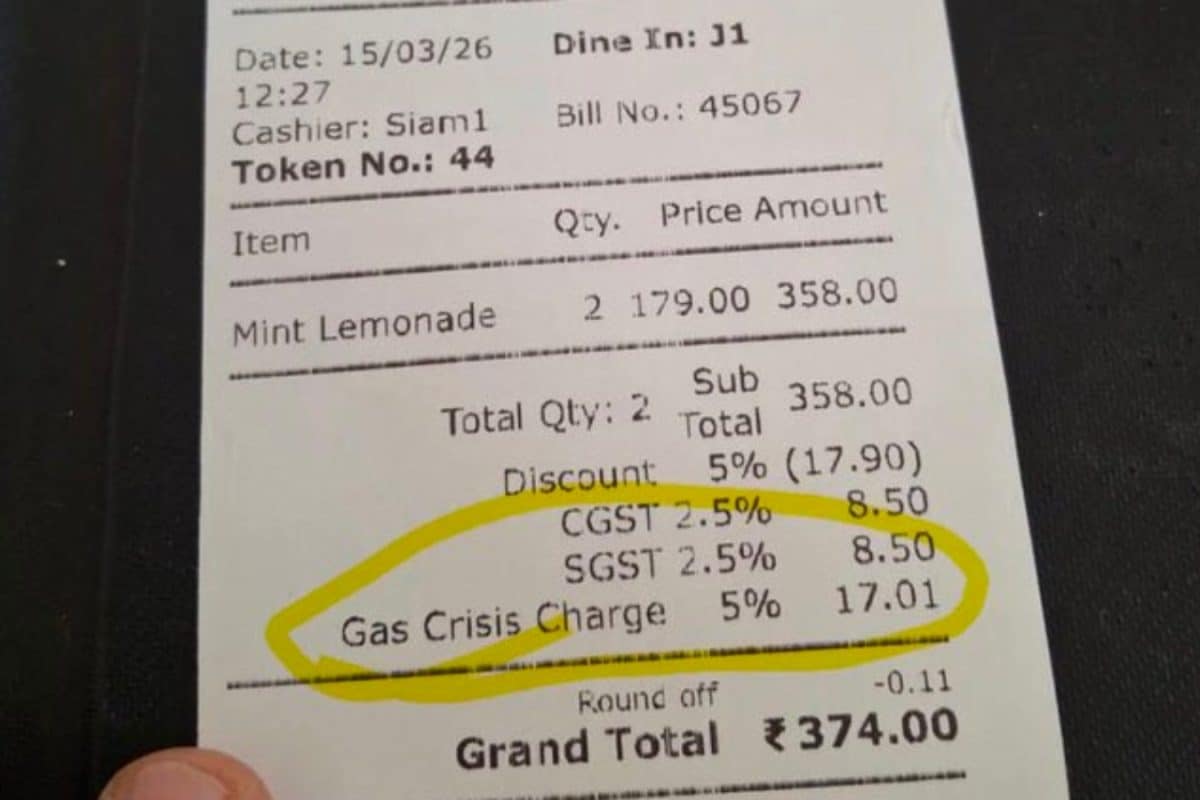
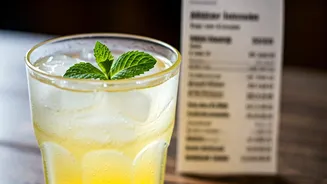
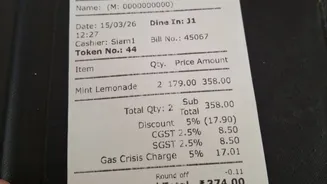
A seemingly ordinary outing to Theo Cafe in Bengaluru took an unexpected turn when a customer's bill for two mint lemonades became a subject of widespread
discussion online. The itemized receipt, which initially showed the lemonades priced at Rs 179 each, followed by a 5% discount and standard CGST/SGST charges, carried a peculiar additional levy. This extra charge, labelled 'gas crisis charge,' amounted to 5% of the bill, totaling Rs 17. The final adjusted amount reached Rs 374, an entry that quickly captured the attention of social media users due to its perplexing nature and the apparent disconnect between the beverage served and the charge levied. The image of this bill was widely shared, sparking immediate debate and a wave of humorous and critical commentary.
Owner's Clarification
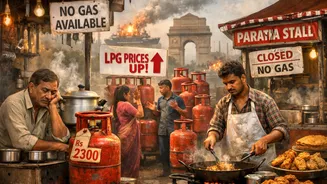
In response to the viral buzz surrounding the 'gas crisis charge,' the owner of Theo Cafe, Avinash, offered an explanation. He stated that the contentious entry was not an intentional charge applied to the customer but rather a result of a system-generated billing update. This update was reportedly implemented in response to the ongoing liquefied petroleum gas (LPG) supply shortage. Avinash emphasized that despite the erroneous system entry, the customer was never actually billed for this extra 'gas crisis charge.' This clarification aimed to address the public's concern and correct the perception that the cafe was attempting to profit from an unrelated supply issue.
Public Reaction
The image of the Theo Cafe bill rapidly circulated on social media platforms, particularly X (formerly Twitter), where it provoked a torrent of diverse reactions. Many users expressed disbelief and amusement, humorously questioning the necessity of gas in preparing lemonade. Comments ranged from witty remarks like 'Nimbu garam karke daala hai kya' (Was the lemon heated before being added?) to more direct questions about the logistics of such a charge. Some users sarcastically suggested that perhaps the cafe had added gas to the lemonade to make it fizzy. Beyond the humor, the incident also raised concerns about fair trade practices, with some commenters pointing out that such arbitrary charges could potentially violate consumer protection laws, specifically referencing the Consumer Protection Act, 2019, and its provisions against unfair trade practices.