





Lunar Base Blueprint Revealed
NASA has recently shared a comprehensive document detailing an exceptionally ambitious long-term objective: establishing a continuous human presence on the
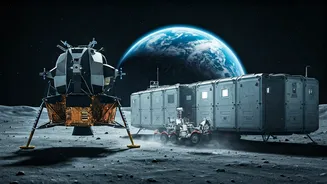
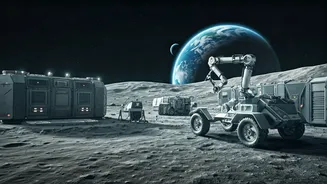
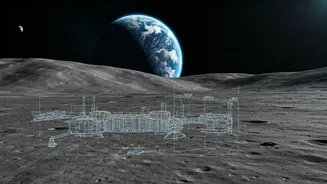
lunar surface. This unveiled plan, which feels more like a detailed list of challenges than a finalized blueprint, underscores the immense scale of the undertaking. The core vision involves an astounding 73 lunar landings, an estimated $20 billion investment for a lunar base, and crucially, laying the foundational elements for subsequent crewed missions to Mars. However, the document candidly admits that many essential technologies are either non-existent or require significant advancement before such a monumental project can be realized. Despite these hurdles, the underlying strategy appears straightforward: to accelerate lunar exploration and systematically build capabilities for sustained inhabitation.
Accelerated Lunar Missions
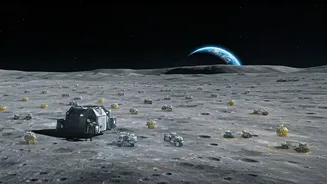
The strategy underpinning NASA's lunar base initiative hinges on significantly increasing the pace of operations. The agency aims to execute a remarkable 21 Moon landings within the next three years, primarily utilizing robotic and uncrewed spacecraft. This aggressive initial phase is designed to meticulously prepare the lunar terrain and validate key systems before astronauts embark on extended stays. This roadmap is intrinsically linked to the broader Artemis program, which has already encountered delays and escalating costs. While recent successes like Artemis II have demonstrated the feasibility of crewed missions, they have also highlighted the substantial amount of work still required to make a permanent base a tangible prospect. The emphasis is on creating a rhythm of frequent, reliable access to the Moon, paving the way for more complex operations.
Power and Survival Challenges
Establishing a functional lunar base extends far beyond simply landing astronauts; it necessitates ensuring their survival and well-being for extended periods. This fundamental shift introduces immense complexities, with power generation emerging as a paramount concern. The selected landing zone near the Moon's south pole presents difficult lighting conditions, characterized by low and inconsistent sunlight. This makes relying solely on solar panels potentially unreliable. Consequently, NASA is actively exploring nuclear power solutions, envisioning small surface reactors to provide a consistent and dependable energy source, especially during periods of darkness. These nuclear systems are anticipated to be vital not only for lunar operations but also for future Mars endeavors. The lunar environment itself poses further threats, including extremely fine and abrasive lunar dust that adheres to surfaces and can degrade equipment over time. Additionally, extreme temperature fluctuations between prolonged sunlight and darkness place significant stress on habitats and essential machinery that must operate continuously.
Landing and Safety Hurdles
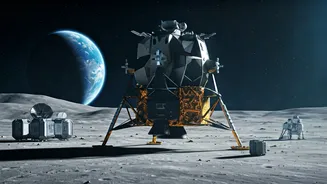
Executing repeated lunar landings, particularly in challenging terrains, presents a significant technical hurdle. Unlike the relatively flat landing sites of the earlier Apollo missions, the new targets at the South Pole are characterized by uneven topography and deep shadows, severely impacting visibility and increasing landing risks. To overcome these difficulties, NASA requires the development of more sophisticated landing systems, including enhanced precision landing capabilities, advanced sensors, and real-time hazard detection technology. Some of these crucial systems are still in their nascent stages of development, and others may necessitate entirely new designs. Furthermore, sustained human presence introduces a host of physiological and psychological concerns. Prolonged exposure to low gravity is known to cause muscle atrophy and bone density loss. Increased radiation levels pose significant health risks, while the abrasive lunar dust could impact respiratory health. The psychological toll of isolation and confinement also requires careful consideration. NASA is actively researching how astronauts will cope with these conditions during extended missions, alongside meticulous planning for essential life support systems such as food, exercise, and medical care.
Phased Lunar Base Plan
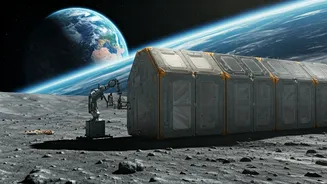
NASA has strategically segmented its lunar base development into three distinct phases to systematically build capabilities and manage complexity. The initial phase, projected to conclude around 2029, is primarily focused on establishing reliable access to the Moon, involving an increase in launch frequency and landings to build operational confidence. The second phase, anticipated between 2029 and 2032, will concentrate on critical infrastructure development, including the deployment of early habitat components and the initiation of semi-regular crewed missions. The ultimate goal of the third phase is to achieve a truly permanent human settlement on the Moon, supported by robust cargo delivery systems and advanced technological infrastructure. The success of each subsequent phase is critically dependent on the achievements of the preceding ones, meaning any delays in the early stages could have a cascading effect on the entire timeline.
Global Competition and Costs
Beyond the technical and logistical challenges, NASA's lunar ambitions are also shaped by an intensifying global space race and escalating financial commitments. China, for instance, is pursuing its own lunar exploration program with the objective of landing astronauts before 2030. Both nations are focusing on the Moon's south polar region due to its potential reserves of water ice, leading to a dynamic competition for favorable landing sites and resources. While not officially declared as a race, the current situation implies increasing pressure to advance lunar capabilities. The financial aspect is equally significant; the overarching Artemis program has already surpassed $100 billion in expenditure, with individual launches costing billions. Reports of potential budget reductions further introduce uncertainty regarding the pace and scope of future progress. Despite these considerable challenges, NASA remains committed to its lunar base vision, viewing it as an essential stepping stone for more ambitious deep space missions, particularly to Mars. The realization of this ambitious plan will undoubtedly hinge on technological innovation, sustained financial investment, and effective risk mitigation strategies.