






Habitat Life Unveiled
NASA's Mars Dune Alpha, a 1,700-square-foot simulated Martian environment, has been home to four dedicated volunteers for 150 days. Ross Elder, Ellen Ellis,
Matthew Montgomery, and James Spicer are at the heart of this critical mission, testing the physical and psychological limits of long-duration space habitation. Their experiences are invaluable for refining strategies for future crewed missions to Mars and beyond. The volunteers have been actively engaged in a range of scientific experiments, crop cultivation, and maintaining the complex systems of the habitat. They also find time for recreational activities, as seen in images depicting them playing table tennis, illustrating the human need for social interaction and stress relief even in extreme conditions. The insights gained from their daily routines and challenges are meticulously analyzed by NASA to ensure astronaut well-being and mission success when venturing millions of miles from Earth.
Simulating Martian Challenges
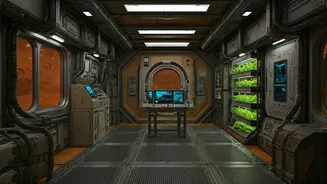
The Mars Dune Alpha experiment meticulously recreates the isolation and communication delays inherent to a Mars mission, with communication to Earth experiencing a significant 22-minute lag each way, and potential complete signal blockages. This simulated distance necessitates a high degree of crew autonomy, requiring participants to possess strong teamwork, critical decision-making skills, and the ability to act decisively in unforeseen emergencies without immediate ground support. Beyond the communication hurdles, the volunteers face practical challenges such as managing resource scarcity, conducting essential maintenance, and successfully tending to the hydroponic crops that supplement their diet. These aspects are crucial for understanding the self-sufficiency required for survival on another planet, preparing astronauts for scenarios where they are the sole problem-solvers in a remote and unforgiving environment. The habitat's design itself, including its nine distinct rooms, communal areas, and private sleeping quarters, is engineered to provide a functional yet livable space.
Beyond Habitat Walls
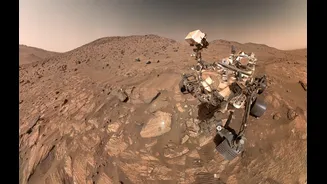
An integral part of the Mars Dune Alpha simulation is the adjacent area designed to mimic the Martian surface, offering a space for the crew to conduct 'Mars walks.' These simulated excursions are vital for training astronauts in extravehicular activities (EVAs) under conditions that approximate the Martian terrain and gravity. Practicing these 'walks' allows NASA to assess equipment performance, astronaut mobility, and the psychological impact of operating in an alien landscape. The volunteers, scheduled to conclude their 150-day mission on October 31 of this year, will have provided a wealth of data by the time they depart. This ongoing research is fundamental to NASA's ambitious goal of sending humans to Mars in the 2030s, although the timeline for such an endeavor remains subject to technological advancements and further mission planning. For now, these simulations on Earth offer the closest tangible experience to the red planet.