






Comet's Grand Reveal
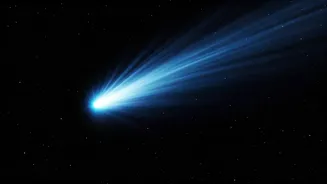
Recent images, courtesy of NASA and the European Space Agency (ESA), have unveiled the dynamic activity of interstellar object 3I/ATLAS as it made its
approach to Earth. This celestial body, classified as a comet, has been the subject of extensive scientific scrutiny, with researchers eager to understand its composition and behavior. The images showcase a 'jet' emanating from the comet, directed towards the sun, presenting a visually stunning spectacle that captures the interest of astronomers and space enthusiasts alike. This closer view offers unprecedented detail of an interstellar visitor, allowing scientists to gather vital data on its structure and composition. These observations are critical in understanding how interstellar objects evolve over time and provide valuable insights into the broader universe.
Debunking Alien Speculations
The appearance and behavior of comet 3I/ATLAS have, unfortunately, sparked rumors and speculation, including claims of alien origin. It is important to emphasize that scientists have addressed these rumors directly, clarifying that the object is indeed a comet. The scientific community has been very clear in its assessment, dispelling any notion of extraterrestrial involvement and redirecting focus toward a purely astronomical explanation. The latest data available from observation and analysis of the comet's properties conclusively point to a natural origin and a process of cosmic evolution. By refuting the conspiracy theories, experts hope to concentrate the public's attention on what really matters, i.e., the scientific value of this event.
Glow and Radiation Effects
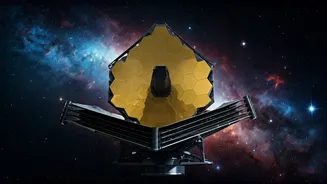
The James Webb Space Telescope's observations have helped scientists to understand the effects of billions of years of space radiation on comet 3I/ATLAS. The comet's glow and its hidden tail in new images provide evidence of the intense effects the cosmic radiation has on its surface. The irradiation process impacts how these objects interact with light and other particles in space. Its green appearance, as seen in the images, is a direct result of this radiation. This phenomenon provides crucial details about the age of the comet, its composition, and its interactions with the cosmos. These observations allow researchers to understand the effects of cosmic radiation on interstellar objects, and the insights they bring are key to furthering our knowledge of the universe.
Mars Orbiter's Perspective
The Mars orbiter has provided researchers with one of the closest looks yet at interstellar comet 3I/ATLAS. The data collected from the orbiter is essential in providing unprecedented detail about the comet's features and activity. This vantage point allows scientists to observe the comet's behavior in its near-Earth phase, and study how it interacts with the solar wind and radiation. This perspective offers a clearer understanding of the comet's structural integrity, the density of its materials, and the nature of the “jet” observed emanating from it. The combined data from the Mars orbiter and other instruments help construct a comprehensive picture of comet 3I/ATLAS.
Hubble's Extended Analysis
Hubble's contributions have reinforced the observations made by other instruments, giving a more comprehensive picture of the interstellar comet. This telescope provided complementary data that enhances the scientific understanding of 3I/ATLAS. These additional findings highlight the comet's dynamic evolution and behavior as it approaches the sun. The collective findings from Hubble and other observatories offer an in-depth view of 3I/ATLAS, which helps scientists in their study of celestial bodies. Together, the combined information helps to gain a clearer understanding of this interstellar visitor's characteristics.