





A Stellar Discovery
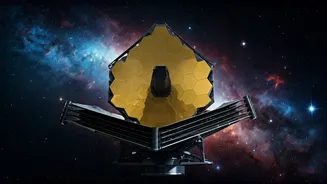
The Hubble Space Telescope, a crucial tool for space exploration, has made a remarkable discovery. It has successfully detected the wake left behind by
a hidden companion star accompanying Betelgeuse, a well-known red supergiant. This is a significant moment for the astronomy field, as it confirms a theory that has been present in scientific discussion for a while. The telescope's capabilities have once again proven to be invaluable for understanding the universe.
Betelgeuse's Secret
Betelgeuse, recognizable for its red color, has a hidden companion. The recent findings point towards the presence of a companion star that has been eluding detection, until now. The Hubble Telescope observed the wake produced by this unseen star. The wake provides evidence of its existence. Scientists can now analyze this data to learn more about the companion star and its characteristics. This observation is a crucial stepping stone in the exploration of binary star systems.
Hubble's Observation
The observation, made possible by the Hubble Space Telescope, provides a unique view into space. The telescope's advanced technology allowed it to detect the disturbances caused by the companion star as it moves through space. This involved analyzing the subtle changes in Betelgeuse's environment. The data gathered provides a better understanding of the dynamics of binary star systems and their evolution over time. This offers a peek into the processes shaping cosmic structures.
Significance of Discovery
The confirmed existence of Betelgeuse's companion star is a pivotal moment in astronomy. It validates earlier theoretical models. This discovery enables scientists to refine their understanding of how stars evolve and interact with one another in a binary system. It allows for more precise models of the stars' behaviors. The finding further fuels interest in the study of binary stars, setting the stage for future exploration and research into the universe's complexity.