





Microscopic Oxygen Makers
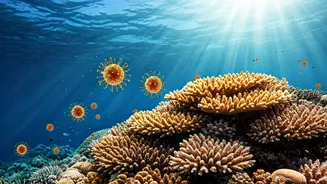
In the vast and intricate ecosystem of the ocean, marine viruses, though tiny, play a monumental role. These microscopic entities are not merely agents
of disease; they are essential contributors to the planet's health. Marine viruses impact the biological pump, which is crucial for carbon cycling, and are instrumental in creating and maintaining oxygen-rich zones, which support marine life. Their influence extends far beyond their size, affecting the entire marine environment and, by extension, the global climate. These viruses assist in the efficient recycling of nutrients, which sustains the foundation of the marine food web, including the phytoplankton. Through their activities, viruses indirectly drive the production of oxygen, which, in turn, influences the capacity of the oceans to absorb carbon dioxide from the atmosphere. The impact these tiny particles have on the planet is a stark reminder of the intricate connections that exist within natural systems.
Viral Influence on Cycles
The activities of marine viruses are intrinsically linked to the carbon cycle, which is a pivotal process in global climate regulation. Viruses affect carbon cycling in several ways, which contribute to the efficient functioning of the biological pump. This pump is the process where carbon is transferred from the atmosphere to the ocean, then transported to the deep ocean, and eventually, some of it sinks to the seafloor. Marine viruses influence the biological pump by infecting and lysing phytoplankton, which are single-celled organisms that photosynthesize and form the base of the marine food web. When viruses kill phytoplankton, this leads to the release of carbon-containing materials into the water. This process can have multiple outcomes, either accelerating the sinking of carbon or facilitating the recycling of carbon within the marine environment. These viral processes are also essential to nutrient cycling. Viruses release nutrients from the organisms they infect, which in turn benefits other organisms and encourages primary production, thus sustaining the entire marine ecosystem.
The Viral Life Cycle
Understanding the lifecycle of marine viruses is essential to appreciating their impact on marine environments. The cycle generally begins with a virus infecting a host cell, such as a phytoplankton cell. Once inside, the virus hijacks the cellular machinery, using it to replicate its genetic material and synthesize new viral particles. This is the lytic cycle, which eventually leads to the death of the host cell. The released viral particles then go on to infect other cells, continuing the cycle. However, some viruses can enter a lysogenic cycle, where the viral DNA integrates into the host cell's genome, remaining dormant for a time before reactivating. This viral lifecycle significantly affects the marine ecosystem. The death of phytoplankton cells because of viral infection releases nutrients and organic matter, as well as influencing the production of oxygen, contributing to oxygen-rich zones. This cycling is a continual process within the ocean ecosystem, which underscores the intricate relationships within the marine environment.
Oxygen Zones Explained
Oxygen-rich zones in the ocean are critical for sustaining marine life, as they provide an environment in which most organisms can breathe and thrive. These zones are not uniform across the ocean. The surface waters typically have high oxygen levels due to direct absorption from the atmosphere and oxygen production by phytoplankton. Marine viruses play a key role in the creation of these oxygen-rich zones. They influence the efficiency of the biological pump. By affecting phytoplankton populations, viruses help determine the amount of carbon that is sequestered, which directly influences the oxygen levels in the water. Furthermore, the decomposition of organic matter caused by viruses consumes oxygen, but this is balanced by the production of oxygen via photosynthesis. The interactions between viruses and marine life, as well as the carbon cycle, are crucial to maintaining oxygen-rich zones. These zones are essential for supporting biodiversity and for the overall health of the marine ecosystem.
Impact on Marine Life
The actions of marine viruses have a profound impact on the structure and function of marine ecosystems, influencing everything from the smallest microbes to the largest marine animals. By controlling phytoplankton populations, viruses affect the base of the food web, which influences the abundance and diversity of all organisms that depend on them. Viruses also contribute to nutrient cycling, making essential resources available to marine life. This is especially true for organisms that reside in oxygen-rich zones. The balance maintained by these tiny organisms is crucial to the health of the marine ecosystem. The interactions between viruses, phytoplankton, and the overall carbon cycle support a diverse marine ecosystem. The role of viruses in disease is also key, helping to regulate populations of marine organisms and helping to prevent overpopulation. Therefore, marine viruses are fundamental to the resilience and productivity of ocean environments.
Viruses and Climate Change
In the context of global climate change, marine viruses are becoming increasingly important. The effects of climate change, such as ocean warming and acidification, have the potential to significantly impact marine viruses and their interactions with other organisms. Higher ocean temperatures can influence the growth and activity of marine viruses, altering their roles in carbon cycling and oxygen production. Changes in ocean acidity, caused by the absorption of carbon dioxide from the atmosphere, can affect the physiological processes of phytoplankton and the viruses that infect them. In this scenario, viruses contribute to the carbon cycle, which influences the oceans' ability to sequester carbon. Understanding how marine viruses will react to climate change is critical for forecasting the future state of the oceans. Further research into this area is required to model and mitigate the impacts of climate change on marine ecosystems.