







Cosmic Enigmas Unveiled
Astronomers have long been intrigued by 'little red dots' (LRDs), peculiar celestial bodies predominantly observed in the universe's nascent stages, approximately
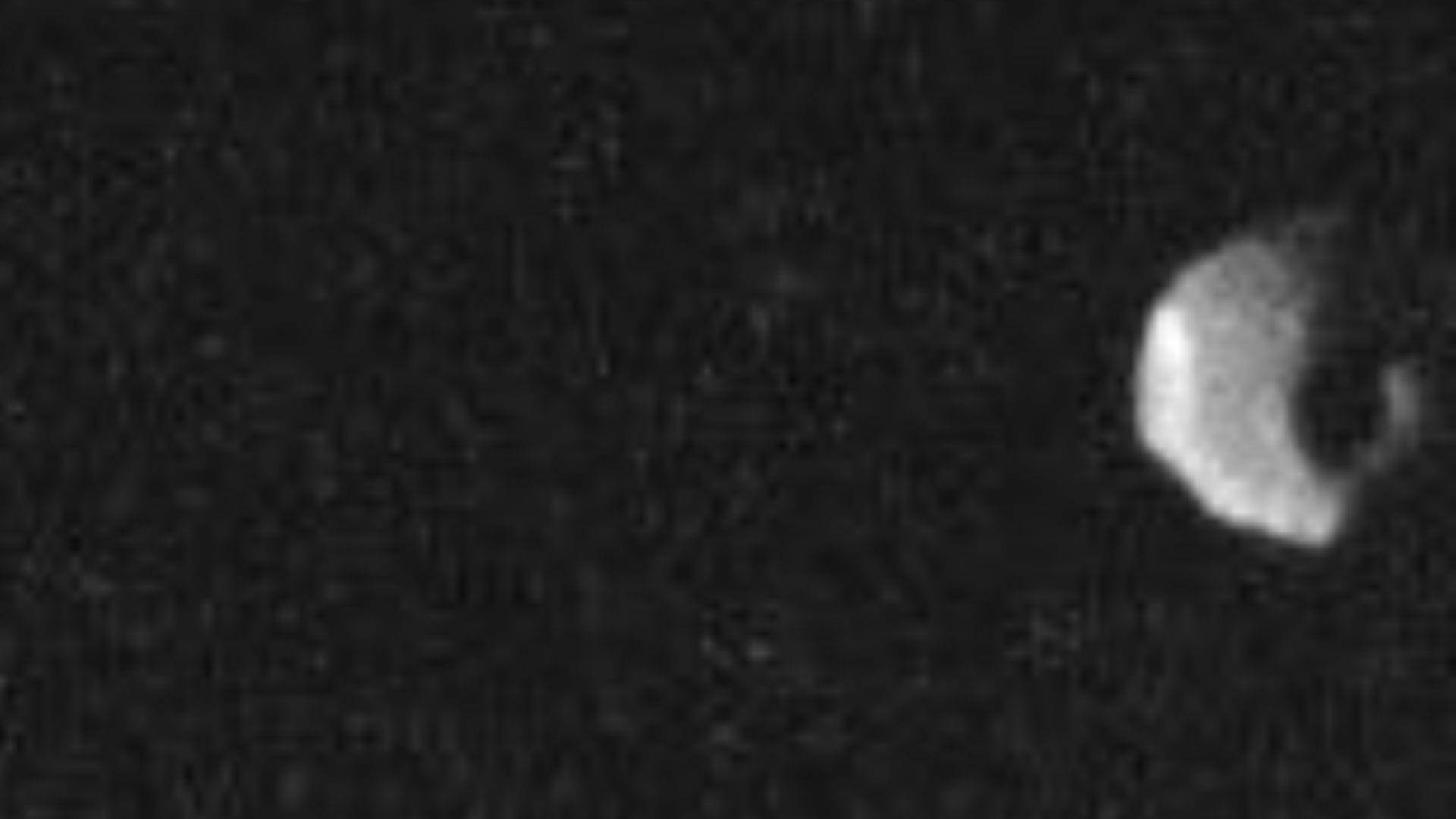
12 billion years ago. These LRDs, first identified by the James Webb Space Telescope (JWST) shortly after its operational launch in 2022, presented a puzzle. Over subsequent years, JWST cataloged hundreds more of these ancient, compact curiosities. Their reddish hue is partly due to the cosmological redshift – the stretching of light waves as they traverse the vast, expanding expanse of spacetime to reach Earth. These LRDs appear transient, forming and then largely fading within the first billion years of the universe's existence. Now, a recent scientific paper details the discovery of an object that might finally clarify the ambiguous nature of these enigmatic LRDs. This newly described entity, officially named 3DHST-AEGIS-12014 and informally termed the X-ray dot (XRD), was initially detected by NASA's Chandra X-ray Observatory over a decade ago but its significance only became apparent when JWST captured images of the same cosmic region. The serendipitous discovery highlights how archival data can contribute to solving contemporary astronomical mysteries.
The X-ray Dot Anomaly
The newly observed X-ray dot (XRD) bears a striking resemblance to the mysterious 'little red dots' (LRDs), with one crucial distinguishing feature: it is a potent source of X-ray emissions. This stark difference from LRDs, which typically do not appear to emit X-rays, deepens the mystery surrounding their identity. Active black holes are commonly associated with the emission of X-rays, emanating from their energetic coronas where infalling matter accelerates to near light speeds under intense heat. This raises a fundamental question: if LRDs represent rapidly developing supermassive black holes, why do they not exhibit the characteristic X-ray signatures seen in other such cosmic entities? A leading hypothesis suggests that these X-rays might be effectively obscured by dense gaseous cocoons enveloping the LRDs. The XRD provides compelling evidence for this phenomenon, as the black hole at its core actively consumes surrounding gas. This voracious appetite carves out channels within its surrounding shroud, creating pathways for X-rays to escape. Concurrently, the object retains its distinct reddish appearance, likened to a cosmic jack-o'-lantern with its internal luminescence subtly visible through external openings. This unique characteristic of the XRD, spewing X-rays while maintaining a reddish glow, may be the missing piece of the puzzle that connects all the observations regarding LRDs.
Implications for Black Hole Growth
The characteristics of the XRD offer significant insights into the evolutionary processes of early supermassive black holes (SMBHs). If LRDs indeed represent a phase of rapid gas accretion by nascent black holes, this period of intense consumption could explain how these colossal objects accumulated millions or even billions of solar masses when the universe was merely a fraction of its current age, around 10% of its present maturity. The XRD's ability to emit X-rays while being partially enshrouded in gas supports the idea that LRDs are young black holes undergoing a transitional period, enveloped by a dense cloud of gas. The composition of this gaseous shroud is akin to certain stellar atmospheres, leading to the intriguing moniker 'black hole stars' for LRDs. Studying these objects is crucial for understanding the evolution of black holes over cosmic time. While astronomers have identified LRD-like objects in more recent epochs, these modern analogues are exceptionally rare, and the reason for this scarcity remains unknown. One theory posits that the reservoirs of gas available for accretion may diminish as the universe matures. Future observatories like the Nancy Grace Roman Space Telescope are poised to scan broader swathes of the sky for these rare, modern LRDs in the evolved universe, complementing the deep-field capabilities of JWST. Regardless of whether the XRD is an ancient LRD or a common SMBH cloaked in an unusual dust, its discovery is a landmark event that promises to illuminate a chain of cosmic mysteries related to the universe's evolution.