


Microscopic Reef Residents
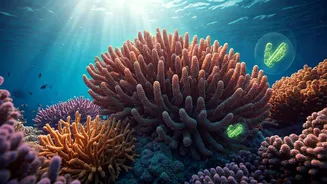
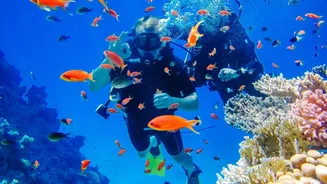
Coral reefs, often lauded as the 'rainforests of the sea' for their visible biodiversity, are now revealing a far deeper, microscopic secret. While supporting
a third of all large marine life and acting as crucial biodiversity hotspots, their true diversity lies within the intricate microbial communities that inhabit them. These unseen partners, comprising bacteria, archaea, fungi, viruses, and algae, form a complex functional unit with their coral hosts, known as the holobiont. Recent groundbreaking research has begun to map this hidden world, showing that each coral species cultivates its own distinct microbial entourage. This intricate web of life, previously invisible to the naked eye and largely unknown to science, is proving to be a treasure trove of biological information and potential discoveries.
Mapping the Unseen Diversity
An extensive international scientific endeavor, supported by the Tara Pacific consortium, has undertaken the monumental task of charting these microbial inhabitants. By analyzing samples from 99 coral reefs across 32 Pacific islands, researchers have meticulously reconstructed the genetic blueprints of 645 microbial species. Astonishingly, over 99% of these species were entirely new to science, with virtually no prior genetic information available. This extensive genomic mapping has unveiled highly specialized relationships between these microbes and their coral hosts, demonstrating their crucial role in the coral ecosystem. The study further revealed that these coral-associated bacteria possess a significantly wider array of biosynthetic gene clusters—the genetic instructions for producing natural chemical compounds—than any previously observed in ocean environments. This underscores the immense, untapped biochemical potential residing within coral microbiomes, a resource far richer than initially imagined.
A Molecular Library at Risk
The implications of these discoveries extend far beyond academic curiosity; they present a critical call for conservation. The decline of coral reefs, driven by climate change and other stressors, means the loss of not only the iconic marine life but also a vast 'molecular library' contained within their microbial communities. This library holds compounds with significant potential for medical and biotechnological advancements. Researchers have identified novel enzymes and bioactive compounds within these microbiomes that could revolutionize drug discovery and industrial applications. The biosynthetic capabilities of these reef-building coral microbiomes rival, and in some cases surpass, those of traditional sources like sponges. Identifying previously unknown microorganisms, such as certain Acidobacteriota living with corals, that produce novel enzymes highlights a massive, largely unexplored resource poised to enable future scientific breakthroughs. The urgent need to protect these vital ecosystems is thus amplified by their potential to yield future innovations for human well-being.
Future Expeditions and Protection
This pioneering research, a collaborative effort involving institutions like the University of Galway and ETH Zurich, is part of a larger initiative to understand the impact of climate change on oceans. Building on these findings, future expeditions, such as the upcoming Tara Coral expedition in Papua New Guinea, aim to collect more samples and investigate why certain coral species are more resilient to changing environmental conditions. This ongoing work is vital for deepening our understanding of coral holobionts and their genetic diversity. The study's publication in Nature marks a significant step in recognizing the intrinsic value and potential of coral reef microbiomes. Protecting these vibrant ecosystems is not merely about preserving their ecological beauty; it is about safeguarding a unique reservoir of biochemical diversity that holds immense promise for future scientific discovery and innovation, impacting fields from medicine to biotechnology for generations to come.