
Twisting Spacetime Observed
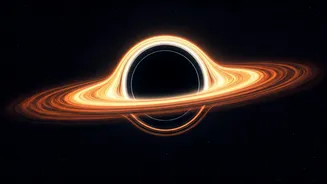
The remarkable observation involved using advanced telescopes to study a black hole and its surrounding environment. The astronomers carefully monitored
the behavior of light as it interacted with the black hole’s extreme gravitational field. This painstaking work gave them the first direct evidence of spacetime warping, a key prediction of Einstein's general theory of relativity. The study used data from multiple telescopes, which were critical to collect the detailed information needed to witness the phenomenon. The observation is a monumental achievement, allowing researchers to study the structure of spacetime near a black hole's event horizon. This directly validates one of the most important theories of modern physics. These observations provided a wealth of information about how massive objects affect the space around them.
Einstein's Theory Verified
Einstein’s theory of general relativity, published over a century ago, predicted that massive objects like black holes would warp spacetime. This warping means that the presence of mass and energy would affect the way objects move through space and time. This study showed that the warping of spacetime near black holes is not just a theoretical concept. The data analysis precisely measured how light was bent and affected by the black hole’s gravity. These observations have provided strong support for Einstein's theories and solidified their place in scientific understanding. It showed how gravitational forces impact not only celestial objects, but also the very fabric of the cosmos.
Methods and Technology
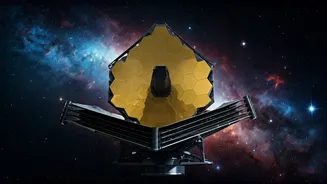
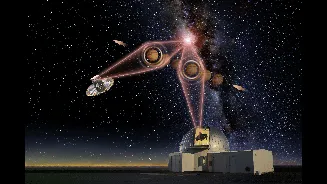
The research leveraged cutting-edge technology to observe the black hole. Astronomers utilized powerful telescopes to collect light from the black hole and its environment. These instruments were able to detect very subtle changes in the light. The sophisticated techniques included very long baseline interferometry (VLBI), which combines observations from multiple telescopes to create a virtual telescope, offering incredibly high resolution. Data from multiple observatories were then combined to build a complete picture of the area around the black hole. This combination of powerful telescopes and clever observation allowed scientists to witness this rare cosmic event, validating Einstein's theory on a whole new level.
Future Research and Impact
This discovery opens new doors for future research in astrophysics and cosmology. Scientists now have a new way to understand black holes and spacetime. This observation prompts even more detailed studies to explore the universe's most extreme regions. The findings will help refine existing models of the universe. This will enable scientists to build a more thorough understanding of gravity. Astronomers will be able to analyze more black holes in the future, providing even more insights. The research's impact will be felt across multiple fields of physics and astronomy, leading to further explorations of the universe's secrets. It is expected to encourage further innovation in telescope design and data analysis techniques.