
Solar Storm Unveiled
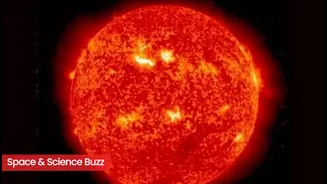
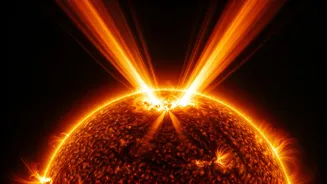
The National Oceanic and Atmospheric Administration (NOAA) has issued a G2 solar storm watch for January. These geomagnetic storms originate from disturbances
on the sun's surface, most commonly from coronal mass ejections (CMEs). When these ejections reach Earth, they interact with the planet's magnetic field, causing a geomagnetic storm. The strength of these storms is categorized on a scale from G1 (minor) to G5 (extreme). A G2 storm, as predicted, signifies a moderate level of activity. The intensity and effects of a G2 storm can vary, but generally, it can cause fluctuations in the power grid, impact high-frequency radio communications, and potentially affect satellite operations, including positioning systems.
Auroral Spectacle
One of the most visible results of a geomagnetic storm is the aurora, often called the Northern or Southern Lights. During a G2 storm, the aurora can be seen at lower latitudes than usual. This means that viewers in certain areas may have a chance to witness these breathtaking displays, which usually appear as curtains of light dancing across the night sky. The aurora's colors depend on the type of gas atoms that are excited and at what altitude the interactions occur. For instance, green is the most common color, produced by oxygen, while red can also be seen at higher altitudes. Nitrogen can also contribute to the blues and reds that might be witnessed during the auroral display.
Tech Implications
While the auroras are a beautiful sight, the G2 solar storm can also have consequences for technology. The storm's interaction with Earth's magnetic field generates electric currents that can interfere with power grids. This can lead to voltage fluctuations and, in extreme cases, power outages. High-frequency radio communications are also vulnerable, potentially experiencing disruptions or complete blackouts. Satellites in orbit may also be affected, as the increased radiation and changes in the ionosphere can impact their operations and even shorten their lifespan. Navigation systems, which rely on signals from satellites, can also experience some inaccuracies or service disruptions during a G2 storm.
Monitoring the Event
Scientists closely monitor the sun's activity using various instruments and observatories to forecast solar storms. Data from satellites, ground-based magnetometers, and other instruments helps predict the arrival time, intensity, and potential effects of these events. Information from NOAA's Space Weather Prediction Center (SWPC) is constantly updated with the latest alerts and forecasts. This real-time information allows organizations and individuals to prepare for possible disruptions and make necessary adjustments to their operations. For instance, power companies may take measures to stabilize their grids, while satellite operators may adjust the positioning and operation of their spacecraft.
Future Forecasts
Solar activity follows an approximately 11-year cycle, with periods of increased activity leading to more frequent and intense solar storms. Scientists are currently studying the sun to better understand the mechanisms that drive these events, aiming to improve prediction accuracy. Longer-term studies focus on the impact of space weather on our technology and infrastructure. By understanding the solar cycle and improving forecasting capabilities, we can minimize the effects of solar storms and continue to enjoy the benefits of modern technology even during periods of increased space weather activity. Advancements in our understanding of these phenomena offer more opportunities for the mitigation of the problems related to the storms in the future.