







Real vs. Digital
Before the widespread adoption of CGI, the film industry depended on practical effects to create visual wonders. These effects involved physical models,
elaborate sets, and innovative techniques. A notable example is the iconic shark from 'Jaws,' which was a mechanical marvel. In contrast to today's reliance on digital effects, filmmakers had to find creative solutions to simulate everything from explosions to alien creatures. The use of miniatures, matte paintings, and in-camera effects was crucial. These methods required significant planning and expertise, showcasing the dedication of filmmakers to create realistic and immersive experiences. The goal was to captivate audiences without the use of computer-generated imagery and creating a sense of realism that resonated deeply.
Miniatures' Magic
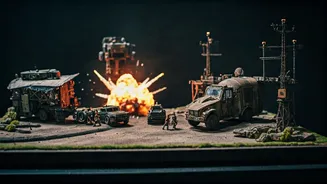
Miniatures played a huge role in replicating large-scale scenes and impossible environments. Films like 'Star Wars' utilized detailed models of spaceships and planets, adding a sense of scope impossible to achieve with real locations. These models were carefully crafted and filmed, often with intricate lighting and camera work to create convincing illusions. The painstaking detail and artistry involved in building and filming miniatures were key to these effects. From spacecraft dogfights to sprawling cityscapes, miniatures were essential for a range of iconic scenes. They required collaboration between model makers, set designers, and visual effects artists to ensure accuracy and visual appeal. The resulting visuals were both impressive and created a unique cinematic style that is different from CGI.
Matte Painting Mastery
Matte paintings were an ingenious technique where artists painted backgrounds or extended sets, which would then be combined with live-action footage. This gave filmmakers the ability to create vast landscapes, futuristic cities, and other expansive environments without actually having to construct them. Artists often painted on glass or directly onto the film, allowing for seamless integration. Films such as 'The Wizard of Oz' and 'Citizen Kane' made significant use of matte paintings. They needed exceptional skill to create images that matched the live-action elements. This method required precise measurements, perfect lighting, and careful composition to create realistic and convincing environments. Matte paintings allowed for innovative storytelling and visual effects that pushed the boundaries of filmmaking.
Practical Pyrotechnics
Explosions and fire effects were created through practical means, often using controlled explosions and careful choreography. Filmmakers employed pyrotechnicians to safely and effectively create dramatic effects. The success of practical pyrotechnics depended on accurate planning and coordination. The use of real explosions added an element of danger and realism to the action sequences. Techniques like creating controlled fires and special effects allowed for impressive visual moments. Safety was paramount in using these effects, requiring meticulous planning and skilled execution. Practical effects created a sense of tension and realism that made movies more intense.
Stop-Motion Animation
Stop-motion animation allowed filmmakers to bring inanimate objects to life. Characters and creatures were created using models, then moved frame by frame to produce the illusion of motion. Films like 'King Kong' used this method to create convincing creatures. Each movement required careful planning and execution, and the work was painstakingly slow. The result was a unique, stylized look that has captivated audiences. Stop-motion animation involved detailed modeling, precise positioning, and patience. The effects added an element of wonder and creativity that was unmatched. The effort was rewarded with iconic characters and a unique visual storytelling technique.
In-Camera Effects
In-camera effects involved capturing visual elements directly during filming. Filmmakers used techniques like forced perspective, mirrors, and multiple exposures to create special effects without post-production manipulation. Forced perspective was used to make objects seem larger or smaller than they actually were. Multiple exposures allowed for the creation of ghostly figures or surreal images. These methods needed precise planning and careful execution. The skill of the camera operator and the ingenuity of the filmmakers were essential. In-camera techniques were an early form of visual trickery that enhanced storytelling.
Creature Creation
Before CGI, creating creatures required the use of elaborate costumes, animatronics, and prosthetics. The creation of realistic creatures required special skills. Often, these methods involved building puppets, using complex mechanics, and applying detailed makeup to actors. Movies such as 'Alien' and 'The Thing' used these effects to create unforgettable monsters. The goal was to blend technology and artistry to bring these creatures to life. These effects required skilled artists to create detailed designs and execute the effect. They gave life to the film's monsters and creatures and are still captivating audiences today.
Water and Weather
Simulating water and weather effects without CGI was a complex task. Filmmakers employed techniques like using practical rain machines, wind machines, and water tanks to create realistic environments. Special effects teams had to devise ingenious ways to control and manipulate these elements. Creating believable weather required careful planning, considering wind direction, lighting, and the movement of water. Films like 'The Poseidon Adventure' used water effects. Safety was important when dealing with weather effects. These practical effects added realism to scenes and greatly enhanced the visual storytelling.