





The 'Blood Moon' Explained
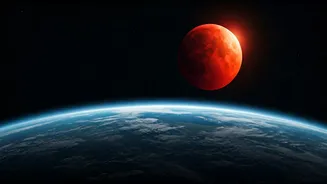
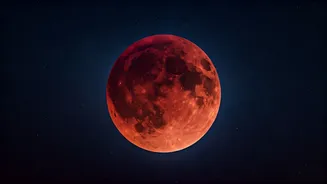
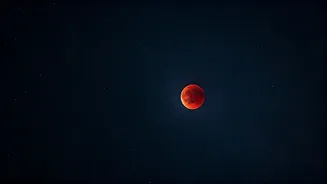
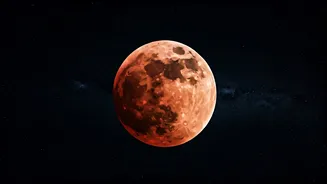
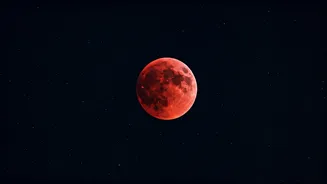
A total lunar eclipse, often dubbed a 'Blood Moon,' occurs when the Sun, Earth, and Moon align perfectly, with Earth positioned directly between the Sun and Moon.
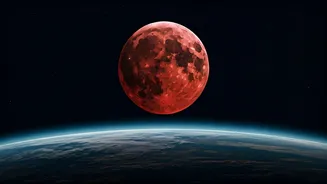
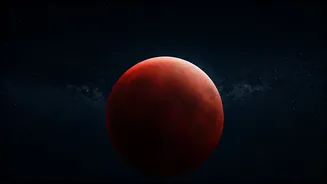
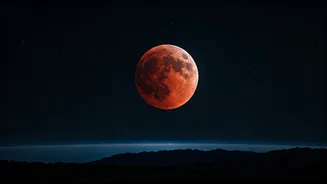
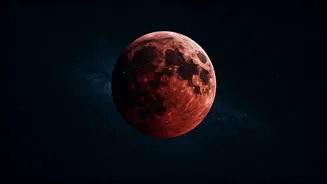
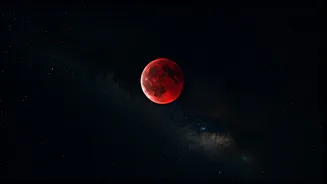
During this alignment, Earth's shadow envelops the Moon, obscuring its usual brightness. The mesmerizing reddish hue is a result of sunlight passing through Earth's atmosphere. While the atmosphere scatters shorter blue light wavelengths, it allows longer red and orange wavelengths to bend and reach the lunar surface. This refraction effect is what gives the Moon its characteristic crimson appearance, making it a truly unique and captivating sight for observers.
India's Viewing Window
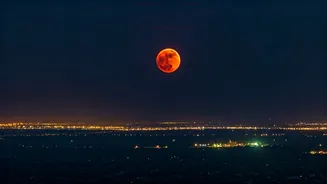
For skygazers in India, the total lunar eclipse on March 3, 2026, will present a fascinating 'moonrise eclipse' scenario. This means that as the Moon ascends above the horizon in different parts of the country, the eclipse will already be in progress. Consequently, the initial stages of the eclipse won't be visible. Viewers will only be able to catch the eclipse from the moment the Moon rises, with the duration of visibility varying across different cities due to this unique timing. The most intense phase, the maximum eclipse, is expected to occur between 06:33 PM and 06:40 PM.
Eclipse Timing Details
Mark your calendars for March 3, 2026, as this is the date for the total lunar eclipse. The celestial event is slated to span from 03:20 PM to 06:47 PM. For those eager to witness this event in India, the Moon is projected to rise around 06:26 PM, making it visible shortly thereafter. The peak of the eclipse, where the 'Blood Moon' effect will be most pronounced, is scheduled between 06:33 PM and 06:40 PM, with the eclipse concluding at 06:47 PM. In comparison, locations like Los Angeles will experience the eclipse much earlier, around 3:04 AM, with other parts of the United States seeing it in the morning hours.