





The Unseen Travelers
A recent scientific investigation has brought to light an unexpected scenario involving our domesticated companions, dogs and cats, and their potential
role in disseminating an invasive species of flatworm. The study, published in the esteemed journal PeerJ, was a collaborative effort between researchers from France's Institute of Systematics, Evolution and Biodiversity and James Cook University in Australia. It proposes that household pets may be acting as unwitting couriers for these unwelcome guests, significantly altering our perception of how these organisms expand their territory beyond what was previously understood.
Traditional Pathways Questioned
Historically, terrestrial flatworms, a group of organisms scientifically known as Platyhelminthes, have been recognized as invasive species primarily facilitated by human activities such as the trade of plants and general gardening practices. These natural propagators typically expand their geographical reach through the movement of flora. However, this established understanding left a perplexing gap: how were these slow-moving worms appearing in distant gardens that had not received any new plant introductions? This unanswered question prompted scientists to seek alternative explanations for their surprisingly rapid dispersal.
Citizen Science Uncovers Clues
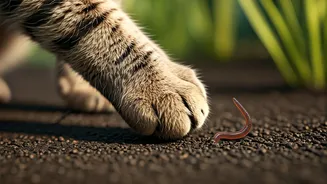
To unravel this mystery, scientists delved into a comprehensive dataset comprising over twelve years of observations collected through various citizen science initiatives across France. This extensive collection of public-contributed data proved invaluable, revealing a pattern that had previously gone unnoticed. Numerous reports documented instances of flatworms attached to the fur of domestic animals, specifically dogs and cats. This recurring observation provided a significant breakthrough, strongly indicating that our pets could be acting as mobile vectors, transporting these invasive worms between diverse locations.
A Sticky Specialist Emerges
Among the approximately ten invasive flatworm species that have established a presence in France, one particular species, Caenoplana variegata, was consistently linked to this pet-mediated transport. The unique characteristic of this worm is its exceptionally sticky mucus, a trait likely linked to its predatory diet, which includes arthropods. Furthermore, its ability to reproduce asexually, meaning it does not require a partner to create offspring, significantly enhances its capacity to colonize new environments effectively. This combination of traits makes Caenoplana variegata particularly adept at spreading.
Global Implications of Pet Travel
Given that domestic pets often travel considerable distances with their owners each year, researchers posit that this previously overlooked mode of dispersal could be a crucial factor in the global expansion of certain invasive flatworm species. The findings suggest that the seemingly innocuous habit of pets exploring their surroundings, coupled with human travel, provides a rapid and efficient means for these slow-moving invertebrates to traverse landscapes and oceans, potentially impacting ecosystems worldwide far more effectively than previously imagined.