







Emissions: A Critical Overview
Methane, a potent greenhouse gas, is a significant contributor to global warming. Understanding its sources and tracking its release is essential for effective
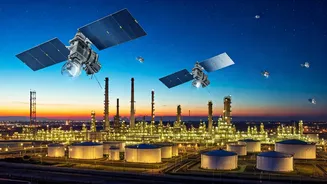
climate action. Traditional methods for monitoring methane emissions have limitations in terms of scope and frequency. However, advancements in satellite technology are transforming this field, providing more comprehensive data and enabling more accurate identification of emission sources. Private satellites, with their advanced sensors and high-resolution capabilities, offer a new level of detail in monitoring these emissions. They can detect methane plumes from various facilities, including those in the oil, gas, and coal industries, providing valuable insights into emission patterns and helping to prioritize mitigation efforts. This has become increasingly important in the push for environmental responsibility and sustainability.
Satellites: A New Perspective
Private satellites are equipped with cutting-edge sensors capable of detecting methane concentrations with remarkable precision. These satellites orbit the Earth, continuously scanning the surface to identify and measure methane plumes. This approach allows for global coverage, providing a comprehensive view of emission sources worldwide. Unlike traditional methods, satellite-based monitoring can identify individual facilities and quantify their methane output. This capability is crucial for pinpointing the biggest emitters and focusing mitigation strategies. The data collected from these satellites can also be integrated with other environmental data to gain a deeper understanding of the factors influencing methane emissions and the overall impact of these emissions on climate change. This data allows for more accurate tracking of emission trends, offering insights into whether mitigation strategies are effective. Such a system allows for the development of strategies to reduce emissions effectively.
Pinpointing Emission Sources
One of the key advantages of satellite-based monitoring is its ability to pinpoint specific emission sources. These satellites can identify methane plumes emanating from oil, gas, and coal facilities. This includes refineries, pipelines, and coal mines, as well as providing important data on their emissions. This level of detail enables targeted investigations and enforcement actions against facilities that are contributing significantly to methane emissions. This information is crucial for holding polluters accountable and driving improvements in emission management practices. This data facilitates more effective monitoring, and guides emission reduction strategies. It offers governments and organizations the evidence needed to make informed decisions about environmental policies and regulations. This pinpointing ability greatly enhances the effectiveness of emissions management efforts.
Global Emission Patterns
The data collected by private satellites provides valuable insights into global emission patterns. By analyzing the data, scientists can identify regions and facilities with the highest methane emissions. This understanding helps to prioritize mitigation efforts and allocate resources effectively. The analysis also reveals trends and changes in emissions over time. This enables environmental agencies and organizations to assess the impact of existing regulations and strategies. This allows for adjustments and improvements in environmental policies. Furthermore, tracking global emissions helps in understanding how various factors, such as economic activity and energy policies, affect methane release. This data allows for international collaboration in addressing climate change. They are essential tools for a coordinated global response, contributing to a better understanding of the global climate challenge and driving concerted action to mitigate methane emissions.
Future Implications
The use of private satellites for monitoring methane emissions has far-reaching implications for climate change mitigation. As technology advances, the accuracy and coverage of satellite monitoring will continue to improve. This will enable more precise tracking of emissions and provide a deeper understanding of the causes and impacts of methane release. This will lead to the development of new and improved methods for reducing emissions. The availability of high-quality, real-time data will allow for more effective enforcement of environmental regulations and will promote greater accountability for polluting industries. In the long term, satellite monitoring is expected to play a crucial role in international efforts to meet climate targets. This can help in implementing strategies that will foster a more sustainable future. This evolving technology stands to reshape climate change mitigation strategies worldwide.