






Solar Maximum Explained
Solar activity ebbs and flows in a roughly 11-year cycle, reaching a peak known as solar maximum. During this period, the Sun's magnetic field becomes
highly active, leading to more frequent and intense solar flares and coronal mass ejections (CMEs). These events release massive amounts of energy and charged particles into space. The year 2026 is anticipated to be at or near this peak, implying heightened solar activity. This increased activity directly translates to a higher probability of auroral displays. The more active the Sun, the more charged particles are flung towards Earth, interacting with our atmosphere and creating the colorful light shows we call the Northern Lights. Scientists closely monitor the sun's cycles to predict the intensity and frequency of these events, giving us advance notice of potential aurora viewing opportunities.
Geomagnetic Storms Unveiled
When the charged particles ejected from the Sun reach Earth, they interact with the Earth's magnetic field. This interaction can trigger geomagnetic storms, which are disturbances in the Earth's magnetosphere. These storms are graded on a scale, with stronger storms leading to more spectacular auroral displays. A G2 geomagnetic storm, for example, is considered a moderate event, while G5 is an extreme storm. The intensity of these storms is a key factor in predicting the visibility of the Northern Lights. During periods of high solar activity, geomagnetic storms become more frequent and potent. This is why 2026 holds so much promise for aurora chasers. The stronger the storm, the further south the aurora can be seen, even from locations that rarely experience these displays. Monitoring geomagnetic storm forecasts helps sky watchers plan their viewing trips and understand the likelihood of a vivid light show.
Predicting Auroras’ Brilliance
Predicting the aurora's brilliance involves complex calculations and observations. Scientists use models to analyze solar activity, the solar wind's speed, and the Earth's magnetic field conditions. These data points provide a glimpse into the potential for geomagnetic storms and, subsequently, auroral displays. The ability to predict these events isn't perfect, but the accuracy is steadily improving with advancements in technology and understanding. Factors such as the orientation of the Sun's magnetic field and the intensity of solar flares play crucial roles. Even small changes in these parameters can dramatically alter the aurora's visibility and intensity. Knowing the optimal viewing times and locations is crucial for experiencing the full spectacle. Information provided by space weather agencies and astronomy websites is essential for staying informed on the most promising viewing windows and locations.
Optimal Viewing Locations
To maximize your chances of witnessing the Northern Lights, choosing the right location is essential. Areas far from city lights and with clear, dark skies offer the best viewing conditions. Northern latitudes, such as those in Canada, Alaska, Iceland, Norway, Sweden, and Finland, are renowned for their high frequency of auroral displays. These locations sit within the auroral oval, a ring-shaped zone around the North Pole where the lights are most commonly visible. However, during periods of strong geomagnetic storms, the aurora can be seen further south than usual. This means that even locations in the northern parts of the United States or Europe can experience the spectacle. When planning a trip, consider the time of year. Winter months, with their long, dark nights, provide the ideal conditions. Check the weather forecast for clear skies and avoid moonlit nights. Websites and apps dedicated to aurora forecasting offer detailed information on the best locations and times to observe the lights.
Preparing for Aurora Hunting
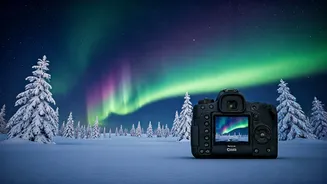
Preparing for a successful aurora-viewing experience involves more than just selecting a location and a date. It’s also crucial to have the right gear and knowledge. Dress warmly in layers, as you will likely be spending several hours outdoors in cold conditions. A hat, gloves, and waterproof boots are essential. Bring a camera and a tripod to capture the stunning display. The aurora is often best photographed with long exposures, which is where a tripod is indispensable. Knowing how to use your camera in manual mode is also helpful. Be sure to research the forecast and have a plan for how to track the aurora as it appears in the sky. Make sure your camera has the appropriate settings for low-light conditions. Ensure your batteries are fully charged and that you have spare batteries on hand, as cold weather can drain them quickly. Pack snacks and drinks to keep yourself energized. Lastly, be patient, as the aurora can sometimes be elusive, and it can take time to appear.