





Bennu's Surprising Appearance
Initial expectations for asteroid Bennu’s surface, based on Earth-based telescopic data, painted a picture of numerous smooth expanses. However, upon closer
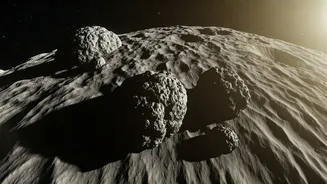
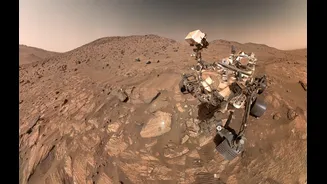
inspection by NASA’s OSIRIS-REx mission in 2018, the asteroid presented a dramatically different, rugged landscape dominated by large boulders. This stark contrast between predictions and reality left scientists perplexed, as lead investigator Andrew Ryan noted their surprise at the sheer prevalence of rocky outcrops, expecting a more accessible surface composed of finer regolith. This unexpected terrain immediately prompted a deeper scientific inquiry into the nature of small celestial bodies and their surface properties, particularly how they interact with solar radiation and dissipate heat.
Thermal Inertia Puzzle
Adding to the enigma was data collected in 2007 by the Spitzer Space Telescope. These observations indicated a low thermal inertia for Bennu, suggesting its surface rapidly absorbed and released heat when exposed to sunlight, akin to fine sand. This behavior seemed contradictory to the presence of large boulders. Typically, substantial rocky masses should retain heat more effectively, much like concrete, remaining warm for extended periods after sunset. The discrepancy between the observed rapid temperature fluctuations and the anticipated heat-holding capacity of boulders fueled further scientific investigation, creating a significant puzzle for the OSIRIS-REx mission team.
Sample Analysis Insights
The OSIRIS-REx mission’s in-situ measurements hinted that Bennu’s boulders might possess a higher degree of porosity than initially assumed, offering a potential explanation for the thermal anomaly. Once the precious samples returned to Earth, scientists had the opportunity to directly test this hypothesis. Researchers meticulously examined returned rock fragments using various laboratory techniques. A key study published in Nature Communications revealed that while the porosity of the rocks did contribute to heat loss, it wasn't the sole factor. Crucially, many of these samples also exhibited extensive internal crack networks, which became the next focus of investigation.
Unraveling Heat Flow
To ascertain the role of these internal cracks in heat dissipation, a specialized team at Nagoya University employed lock-in thermography. This advanced laser-based technique allowed researchers to precisely target minute areas on the samples and meticulously track how heat propagated through their internal structure, much like observing ripples expand across water. This experimental approach yielded highly compelling results. The thermal inertia measured from these lab samples significantly surpassed the readings obtained from the spacecraft's instruments, aligning with findings from Japan's Hayabusa-2 mission, further intensifying the scientific interest.
Scaling Up Findings
Translating the heat flow behavior observed in small, returned particles to the scale of Bennu’s massive boulders presented a unique challenge. Scientists at NASA's Johnson Space Center utilized advanced X-ray computed tomography (XCT) scanning within a controlled glove box environment. This meticulous process involved sealing individual sample particles in airtight containers under a nitrogen atmosphere to prevent contamination. The XCT scans then created detailed three-dimensional digital models of each particle's internal structure, allowing researchers to visualize the intricate shapes and crack formations without compromising the sample's integrity. This method ensured that the samples remained pristine throughout the analysis.
Solving the Thermal Mystery
The data derived from the X-ray CT scans, which generated a permanent 3D digital archive of the samples' internal architecture, proved instrumental. This information was then integrated into computer simulations modeling heat flow and thermal inertia. When these simulation results were extrapolated to the size of Bennu's actual boulders, they remarkably matched the thermal data collected by the OSIRIS-REx spacecraft. This breakthrough revealed that the missing piece of the puzzle was indeed the extensive network of cracks within the rocks, not just their porosity. This finding fundamentally alters how scientists interpret thermal properties observed from Earth-based asteroid surveys.