



JWST's Cosmic Gaze
The James Webb Space Telescope (JWST) is revolutionizing astronomical research. Designed to observe infrared light, JWST can penetrate cosmic dust and
see farther into space and time than its predecessors. This capability is crucial for studying the early universe, as the light from the first stars and galaxies has been stretched by the expansion of space into the infrared spectrum. The telescope’s large mirror and advanced instruments allow it to capture faint light from distant objects, providing unprecedented details. Through its observations, JWST aims to uncover the mysteries of the universe's formation, including the emergence of the first supermassive black holes, which are found at the centers of most galaxies.
Early Black Holes
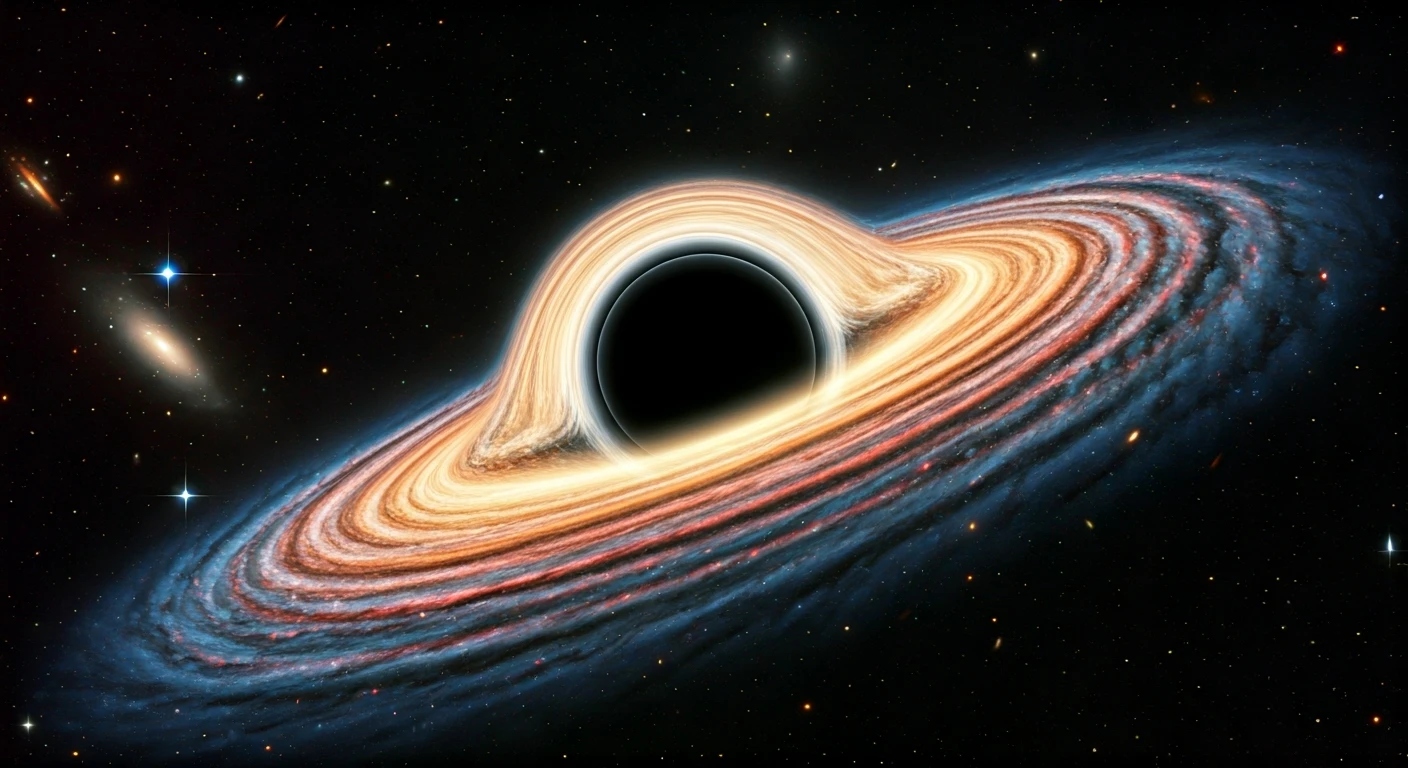
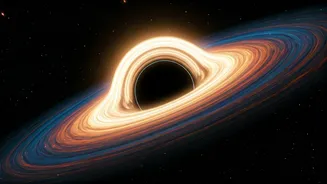
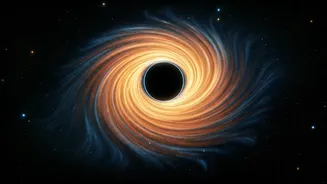
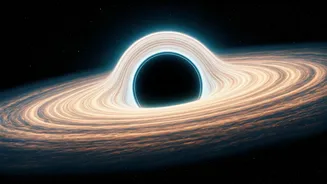
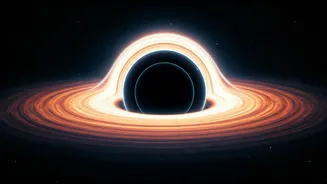
Supermassive black holes are incredibly dense regions of space with gravitational pulls so strong that nothing, not even light, can escape. Astronomers have long been puzzled by their presence so early in the universe's history. JWST’s observations are vital in this regard, as the telescope is allowing astronomers to see these black holes as they existed billions of years ago. These early black holes are remarkably massive, and their existence so soon after the Big Bang presents a challenge to current models of how they form. JWST is helping scientists refine their theories, offering clues about the processes that allowed these giants to grow so rapidly in the young universe. This research is critical to understanding the evolution of galaxies and the role black holes play in shaping the cosmos.
Unveiling Origins
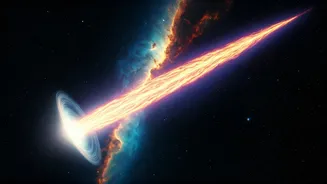
JWST's advanced instruments are crucial for peering into the hearts of distant galaxies and studying the environment around early black holes. The telescope is detecting the light emitted from the accretion disks of black holes, the swirling disks of gas and dust that orbit them. Analyzing this light provides essential information about the black holes' masses, growth rates, and how they interact with their surroundings. By observing the environments of these black holes, researchers can learn about the conditions that led to their formation. The data gathered helps to understand how black holes influence the formation and evolution of their host galaxies, including the role of black hole feedback mechanisms that can regulate star formation within galaxies.
Future Discoveries
The ongoing mission of JWST promises even more exciting discoveries. With each new observation, scientists gain a clearer picture of the early universe and the processes that shaped it. Future studies will involve deeper analyses of the data already collected and further observations of various cosmic objects. Researchers are developing new methods to analyze the vast datasets being produced, which include sophisticated models to understand the complex interactions between black holes and their galaxies. JWST is also expected to probe deeper into the universe, potentially finding even earlier black holes, thereby refining our understanding of the universe's first billion years. The insights from these studies will transform our understanding of cosmic evolution.