







HBM4 Chip Breakthrough
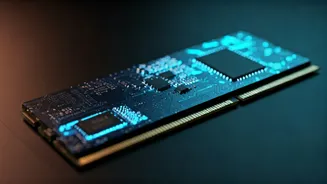
A pivotal moment in AI development is unfolding as the mass production of HBM4 chips, the latest iteration of high-bandwidth memory, is set to commence.
Industry sources indicate that the initial shipments are slated to begin shortly after the Lunar New Year holiday. These advanced memory components are destined for integration into graphics processing units (GPUs), which are the workhorses behind sophisticated generative artificial intelligence systems. This marks a significant technological achievement, with one industry observer noting that the company in question has reaffirmed its leading position in the market through the pioneering mass production of these high-performance HBM4 chips, boasting both the largest global production capacity and an extensive product range. The transition from current fifth-generation HBM3E technology to HBM4 is anticipated to be a key development in the evolving memory landscape for AI applications.
Powering Future AI
The upcoming generation of AI accelerators, codenamed Vera Rubin, will be a primary beneficiary of this new HBM4 technology. Plans are in motion to integrate these cutting-edge memory chips directly into these next-generation processors, promising a substantial boost in their computational power and efficiency for AI tasks. Crucially, the production is aligned with the rollout schedules of upcoming products from key partners, ensuring a seamless integration into the AI ecosystem. This strategic alignment is further solidified by the successful completion of stringent quality certification processes by the chip manufacturer, securing substantial purchase orders. The volume of HBM4 samples provided for module testing by customers has also seen a considerable increase under the latest agreements, underscoring the growing demand and confidence in this new technology.
Financial Performance Surge
In parallel with this technological advancement, the company behind this innovation has reported exceptional financial results, achieving a record-breaking operating profit of 20 trillion won in the fourth quarter. This figure, the first of its kind for the company, signifies a remarkable surge of over 200 percent year-on-year, driven by a robust semiconductor market cycle. Sales also reached unprecedented heights, climbing to 93 trillion won, a 22.7 percent increase. These preliminary earnings figures surpassed market expectations, highlighting the company's strong performance and its significant contribution to the booming semiconductor industry. The net profit details have not yet been disclosed, but the operating profit alone marks a significant milestone in the company's financial history.