
Dark Matter's Enigma
Dark matter remains a fundamental mystery in the realm of astronomy. Unlike ordinary matter, it doesn't emit or interact with light, making it invisible
and difficult to detect. This enigmatic substance is believed to constitute a significant portion of the universe's mass, yet its true nature remains elusive. Scientists can only infer its existence through its gravitational effects on visible matter, such as galaxies and stars. The study of dark matter is crucial for comprehending the universe's large-scale structure, the formation of galaxies, and the ultimate fate of the cosmos. The discovery of Cloud 9 offers a unique opportunity to study dark matter in a previously unexplored environment, potentially revealing new clues about its properties and behavior. Understanding dark matter is also essential for refining cosmological models and predictions about the universe's past, present, and future. Researchers continue to employ various methods, from observing gravitational lensing to constructing sophisticated simulations, in an attempt to unravel the secrets of this invisible cosmic component and its influence on the observable universe.
Hubble's Observation Process
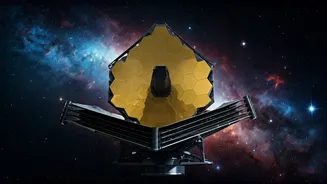
The Hubble Space Telescope, a collaboration between NASA and the European Space Agency, played a critical role in the identification of Cloud 9. This space-based observatory, equipped with advanced instruments, allows astronomers to observe the universe in unparalleled detail, unaffected by the Earth's atmospheric distortions. The telescope's ability to capture high-resolution images across a wide spectrum of light has proven invaluable for studying distant galaxies, nebulae, and other celestial objects. In the case of Cloud 9, the Hubble utilized its powerful capabilities to detect subtle gravitational effects and distortions in the surrounding space, which indicated the presence of dark matter. This indirect method is commonly used to study dark matter, as the substance itself cannot be directly observed through conventional means. The precise observations and meticulous analysis conducted by the Hubble allowed scientists to confirm the existence of a starless dark matter cloud, providing valuable data for further investigation. The success of the Hubble Telescope underscores its significance in advancing our understanding of the cosmos and its ongoing contributions to groundbreaking discoveries in astrophysics.
Cloud 9's Significance
The discovery of Cloud 9 holds significant implications for our comprehension of dark matter and the universe's structure. This starless cloud provides a unique, isolated environment for studying dark matter, free from the complexities and interference of stars and other visible matter. The cloud's composition and behavior can offer valuable insights into the fundamental properties of dark matter, such as its particle nature and interactions with other cosmic components. This particular finding can help confirm and refine existing theories of galaxy formation. By analyzing the gravitational influence of Cloud 9, researchers can gain a better understanding of how dark matter influences the distribution and evolution of galaxies. Furthermore, the detection of this isolated dark matter structure can challenge current cosmological models and potentially lead to the development of new theories. The findings are expected to have a lasting impact on astronomy and inspire future research endeavors, fostering a deeper appreciation for the cosmos. This could also pave the way for the development of new observation strategies and advancements in our ability to probe the hidden aspects of the universe.
Future Research Avenues
Following the discovery of Cloud 9, future research efforts will focus on several key areas. Scientists will conduct further observations using the Hubble Telescope and other advanced instruments to gather more detailed data about the cloud's characteristics. This will involve analyzing its gravitational effects on surrounding objects, studying its mass distribution, and examining its interactions with the cosmic environment. Researchers also plan to use advanced computer simulations to model the cloud's behavior and compare their findings with theoretical predictions. These simulations can help refine existing models of dark matter and galaxy formation and test various hypotheses about its nature. Furthermore, scientists aim to explore other potential dark matter structures in the universe, searching for similar isolated clouds or regions where dark matter's effects are more pronounced. Such exploration will enhance our knowledge of dark matter's role in the universe. The ongoing pursuit of knowledge promises to unlock further mysteries of the cosmos and refine our current understanding of the universe.