







A Cosmic Phenomenon
Gamma-ray bursts (GRBs) are among the most energetic events known to humanity, emitting colossal amounts of energy within seconds or minutes. They are typically
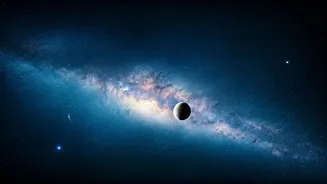
associated with the collapse of massive stars or the merging of neutron stars. This particular GRB, designated GRB 221009A, stood out due to its exceptional longevity, maintaining its intensity for over 10 minutes. This extended duration allowed scientists to gather a wealth of data that would be impossible to obtain from shorter bursts. The burst originated approximately 8 billion light-years away. This distance offers a glimpse into the early universe, allowing astronomers to explore conditions close to the Big Bang.
Deciphering the Source
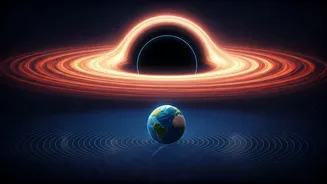
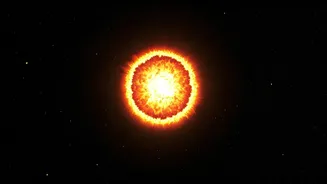
The origin of GRB 221009A is believed to be the collapse of a massive star, specifically a type known as a 'collapsar'. This occurs when a star much larger than our sun exhausts its nuclear fuel, causing its core to implode and form a black hole. As the stellar material falls into the black hole, it creates a powerful jet of particles traveling at nearly the speed of light. This jet, when pointed toward Earth, generates the intense gamma-ray emission observed as a GRB. The duration of this burst suggests that the star's collapse was a complex process, involving prolonged accretion of matter into the black hole.
Unveiling Cosmic Secrets
The extended duration of GRB 221009A presented a unique opportunity for scientists to study the aftermath of the burst. By observing the afterglow – the lower-energy radiation that follows the initial gamma-ray emission – astronomers could analyze the composition and density of the surrounding interstellar medium. This analysis offers insights into the environment where the massive star lived and died. Further analysis of the afterglow has unveiled clues about the composition of the universe in its early stages. This provides astronomers with a valuable glimpse into the universe's history and evolution. It helps determine the elements and distribution of matter during the cosmic dawn.
Implications and Future Research
The discovery of GRB 221009A has significant implications for our understanding of the universe. It emphasizes that long-duration bursts offer a greater opportunity for detailed study, which aids in refining our models of black hole formation and stellar evolution. Astronomers are now focusing on analyzing data from various telescopes to further understand this event. They're trying to determine the precise nature of the progenitor star, its environment, and the black hole that resulted. This research will help refine the methods for analyzing future bursts, and discover more information about the early universe.