







Navigating Industry Shifts
The technology landscape is always changing, and Intel is actively maneuvering to stay ahead. The company's recent results are particularly important,
offering insight into their strategies. These efforts are especially critical in the face of strong competition from other companies in the semiconductor industry, who also want to control a significant portion of the AI market. This sector's growth is driven by the increasing need for powerful chips designed to handle the huge demands of artificial intelligence. In this context, Intel’s adaptability is crucial. They are re-evaluating their strategies and investments to take advantage of the opportunities provided by the expansion of AI data centers. Successfully navigating these shifts involves not only technological advancements but also smart strategic planning and an ability to respond quickly to market needs and competitor moves. This includes developing and improving their existing product lines. Overall, Intel's performance in this new environment will determine its trajectory in the dynamic world of technology.
AI Data Centers Surge
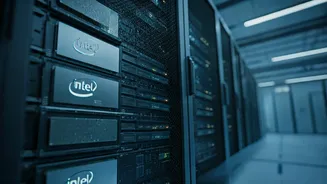
The growing demand for AI data centers is a major factor shaping Intel’s direction. These centers are essential for training the complex AI models that are increasingly used across numerous industries. These require high-performance processing capabilities, and Intel is positioning itself to be a key provider of such solutions. The rise in AI applications boosts the need for efficient and powerful hardware, and this demand has directly influenced Intel's focus on chip design. They are adapting their current production facilities as well as constructing newer ones with the aim of boosting the output. To maximize the AI data center market, Intel is focused on creating specialized products. In this period, Intel's capacity to adjust its product portfolio and quickly meet customer needs is vital. Intel's success hinges on adapting to the evolving demands of AI and establishing themselves as a vital partner for companies in data-intensive sectors, which is something that has already started.
Strategic Turnaround Goals
Intel has clearly defined objectives that are integral to its turnaround plan. These goals focus on regaining technological leadership and increasing its market share in key sectors. The first of these efforts is to recover its former position as a leader in semiconductor production. This involves improving the performance of the chips, as well as the manufacturing process and supply chain. At the same time, Intel aims to increase its presence in the AI and data center markets by developing and supplying innovative, powerful products. This strategy involves substantial investments in both research and development, as well as expansions of its manufacturing capabilities. To support these objectives, Intel is committed to building partnerships with industry leaders. The company also hopes to optimize its operational efficiency, which will reduce costs and improve profitability. Success hinges on a series of carefully planned strategies and a strong capacity to execute them effectively.
Competitive Landscape Examined
Intel is not the only player in the race to dominate the AI chip market. The company encounters stiff competition from many other semiconductor companies. Each competitor brings a unique set of products and market strategies to the table. In this competitive landscape, it's vital for Intel to highlight its strengths, such as its long-established industry relationships and vast resources for production and research. To maintain its competitive edge, Intel is always innovating, enhancing its product offerings and constantly improving its strategies. Another key competitive advantage is its ability to meet the needs of a wide range of customers with varying performance requirements. As AI technology advances and demand for AI data centers grows, competition in the sector will only intensify. Intel’s ability to successfully navigate this challenging environment will determine its long-term market position and impact the overall dynamics of the AI chip market.
Financial Performance Analysis
A careful study of Intel’s financial performance is crucial to understanding the effectiveness of its turnaround efforts. Investors and industry watchers alike closely monitor key metrics such as revenue growth, gross margins, and R&D spending. These numbers offer important insights into the company’s success in carrying out its strategic goals. Any changes in these indicators signal any shifts in market dynamics or strategic realignments. Examining the revenue streams from its AI-focused products is especially important. The company's investments in research and development, and the efficiency of its cost management, also contribute to the bigger picture. The ability of the business to stay profitable and generate enough cash flow to support its future investments is an important indicator of its long-term viability. Analyzing these financial measures provides an understanding of Intel's journey to improve its market position and reach its strategic goals.