









Orbital Computing Frontier
Google is actively pursuing a groundbreaking concept known as Project Suncatcher, which envisions a network of solar-powered satellites acting as distributed
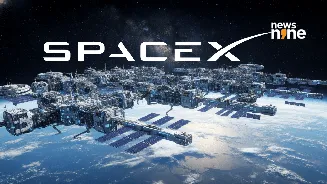
data processing units in Earth's orbit. This ambitious research endeavor aims to create an AI cloud in space, leveraging advanced Tensor Processing Units (TPUs) integrated into these celestial nodes. The company is already in discussions with aerospace leaders, including SpaceX, to explore launch possibilities for this innovative project. The initial phase anticipates a prototype launch around 2027, in collaboration with Planet Labs. This move signifies a significant step towards realizing the potential of space-based computing infrastructure, opening up new avenues for artificial intelligence applications and data management beyond terrestrial limitations. The challenges are immense, but the potential rewards of a truly global, always-on AI network are considerable.
Strategic Alliances in Space
The pursuit of an orbital data center paradigm has brought about intriguing strategic conversations, notably between Google and SpaceX. Alphabet's Google has publicly confirmed ongoing discussions with SpaceX, led by Elon Musk, regarding future launch services crucial for Project Suncatcher. This potential collaboration is particularly noteworthy given Musk's past public critiques of AI development and his co-founding of OpenAI, an entity initially established partly in response to Google's AI ambitions. The present scenario sees both entities, despite historical friction, converging on the cutting edge of space technology and AI infrastructure. This partnership could be a pivotal moment for SpaceX, especially as it gears up for a potential initial public offering, a move likely driven by the substantial capital and technological advancements required for projects like orbital data centers. The development of such high-value space assets is seen as a key driver for SpaceX's financial future.
Challenges and Future Scope
Establishing data centers in orbit presents a formidable set of technological and logistical challenges. Project Suncatcher, aiming to deploy solar-powered satellites equipped with sophisticated AI processing capabilities, requires overcoming significant hurdles in satellite design, power management, data transmission, and network stability in the harsh environment of space. The sheer expense and complexity of such an undertaking necessitate strategic partnerships and substantial investment, which is precisely why Google is engaging with companies like SpaceX. Furthermore, the potential for competition and collaboration in this nascent field is high, as evidenced by Anthropic's recent agreement to utilize SpaceX's terrestrial computing power and their expressed interest in future space-based data center developments. The success of Project Suncatcher could redefine the landscape of AI and cloud computing, offering unprecedented capabilities for global connectivity and advanced computation.