







A Skincare Star's New Role
Madecassic acid, widely recognized in the realm of Korean skincare for its remarkable soothing properties, is now at the forefront of scientific discovery
for an entirely different purpose. Far from its usual cosmetic applications, this naturally occurring compound is being investigated for its potential to combat the escalating threat of antibiotic-resistant bacteria. Researchers at the University of Kent, in collaboration with colleagues at University College London (UCL), have employed advanced computer modeling and laboratory experimentation to scrutinize the antibacterial capabilities of madecassic acid. This compound is derived from Centella asiatica, a plant with a long-standing history of medicinal use across various Asian cultures. The burgeoning interest in madecassic acid stems from the urgent need for novel approaches to tackle the global health crisis posed by antimicrobial resistance, a challenge that threatens to make common infections untreatable.
Combating Resistance
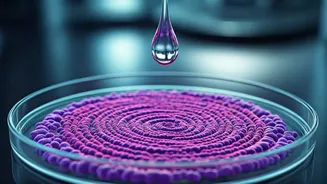
The global health landscape is increasingly defined by the formidable challenge of antimicrobial resistance. Projections indicate that infections resistant to current antibiotics could lead to an alarming 39 million fatalities worldwide between 2025 and 2050, underscoring the critical need for new treatment strategies. Given the often lengthy and costly process of developing novel antibiotics, the scientific community is actively exploring alternative sources, with natural substances taking center stage. A recent study, published in RSC Medicinal Chemistry, highlights the significant potential of madecassic acid. The research demonstrated that this compound effectively inhibits the growth of antibiotic-resistant strains of E. coli. Its mechanism of action involves a strong affinity for the cytochrome bd complex, a vital respiratory protein system essential for the survival of many pathogenic bacteria during infection. Crucially, this protein complex is not present in human or animal cells, suggesting a targeted approach that minimizes harm to the host. By binding to cytochrome bd, madecassic acid disrupts its normal function, thereby weakening the bacteria and arresting their proliferation. This discovery offers a promising pathway toward developing alternative antimicrobial therapies.
Enhanced Efficacy Through Modification
Beyond its inherent antibacterial properties, madecassic acid presents another significant advantage: its chemical structure is amenable to relatively straightforward modifications. This characteristic allows scientists to engineer new variants with potentially amplified antimicrobial potency. The research team successfully isolated madecassic acid from a plant extract sourced from Vietnam and subsequently synthesized three modified versions of the compound. Rigorous testing revealed that all three derivatives were capable of inhibiting the cytochrome bd complex and effectively halting bacterial proliferation. Notably, one of these modified variants exhibited a remarkable capacity to eradicate E. coli at higher concentrations, suggesting a substantial enhancement in its bactericidal activity. Future research endeavors will concentrate on further refining these promising compounds, with the ultimate goal of optimizing their effectiveness for use as next-generation antibacterial drugs. This work builds on the understanding that even natural compounds can be further improved through scientific innovation.
Implications for Skin Health
The groundbreaking findings regarding madecassic acid's antibacterial prowess could also illuminate its role within the complex microbial ecosystem of the skin. When ingredients derived from Centella asiatica are incorporated into skincare formulations, their impact on the skin's natural bacterial balance has been a subject of ongoing interest. This new research may provide deeper insights into how these plant-based compounds interact with and influence skin microflora. Dr. Mark Shepherd, a lead author of the study and Reader in Microbial Biochemistry at Kent, emphasized the historical significance of plants as a source of medicinal compounds. He noted that contemporary scientific methodologies are now capable of unveiling the intricate mechanisms by which these natural substances operate. Dr. Shepherd expressed optimism about the ongoing exploration of natural antimicrobials, viewing plants as incredibly rich and diverse 'chemical factories' that continue to offer valuable therapeutic possibilities, potentially impacting both systemic and topical treatments.