






Pain's Emotional Toll
Chronic pain affects a vast number of people, often leading to mental health challenges like depression and anxiety. However, the reasons behind this variability
have remained elusive. New research is shedding light on this by identifying a specific brain mechanism that seems to determine an individual's susceptibility to depression in the face of persistent discomfort. Scientists have found that the brain doesn't just passively endure pain; it actively adapts. Early on, the brain may exhibit a capacity to cope with ongoing pain, demonstrating resilience. This resilience is linked to distinct patterns of activity and structure within the hippocampus, a key area for memory and emotional regulation. Individuals who remain emotionally stable despite chronic pain show different biological markers in this region compared to those who develop depression, suggesting a complex interplay rather than a simple cause-and-effect.
Hippocampal Adaptations
The hippocampus, a vital brain region responsible for memory formation and emotional processing, appears to be central to the pain-depression link. Researchers observed that individuals experiencing chronic pain but maintaining emotional well-being often displayed a larger hippocampal volume and heightened activity within this area. Furthermore, they performed better on cognitive tasks related to learning and memory, suggesting a robust initial adaptation to the pain stimulus. Conversely, those suffering from both chronic pain and depression exhibited a smaller hippocampus, reduced activity, and impaired cognitive functions. Crucially, longitudinal data revealed that these differences don't manifest instantaneously but rather develop gradually over time, indicating that prolonged pain itself may drive these structural and functional changes within the hippocampus. This suggests that the brain's response to enduring pain is a dynamic process, potentially leading to vulnerability.
From Resilience to Vulnerability
To further investigate the progression from pain to depression, scientists conducted parallel studies in animal models experiencing chronic neuropathic pain. This research revealed a sequential shift, beginning with heightened pain sensitivity, progressing to anxiety-like behaviors, and ultimately manifesting as depression-like symptoms. These behavioral changes were directly correlated with gradual alterations in the hippocampal structure and its functional networks, illustrating how sustained pain can remodel neural circuits that govern emotional states. A specific area within the hippocampus, the dentate gyrus, known for its capacity to generate new neurons, emerged as a critical regulatory point. Initially, new neurons in the dentate gyrus showed increased activity, signaling an adaptive response to chronic stress. However, over time, the brain's immune cells, microglia, became overactive. This dysregulation in communication between neurons and microglia was identified as a turning point, transitioning the brain from adaptive mechanisms to detrimental signaling pathways, ultimately contributing to depressive symptoms.
Targeting Inflammation
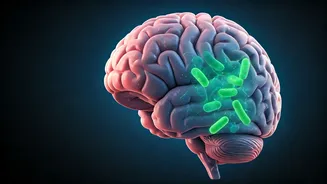
The research highlights a significant breakthrough in understanding the transition from chronic pain to depression, identifying overactive microglia within the hippocampal dentate gyrus as a key culprit. When scientists experimentally reduced this abnormal microglial activity in animal models, they observed a marked improvement in depression-like symptoms. Importantly, this intervention did not negatively impact overall brain function, suggesting a targeted approach is possible. This finding provides compelling evidence that inflammation in the hippocampus could be a critical factor in the development of depression among individuals with chronic pain. The study's conclusions suggest that by addressing this inflammatory response, potentially through early therapeutic interventions, it might be possible to prevent the onset of depression. Professor Jianfeng Feng emphasized that the brain actively attempts to manage emotional well-being in response to pain; when this regulatory system remains balanced, resilience is maintained, but disruption, particularly due to hippocampal inflammation, can lead to depression, opening avenues for novel treatments.