



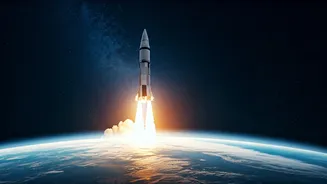
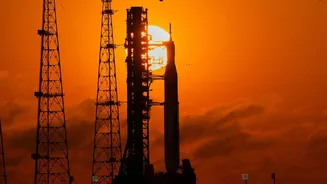

Mission Overview & Objectives
Artemis II represents a monumental leap forward in NASA's ambitious program to explore the cosmos, serving as the crucial next phase after the uncrewed
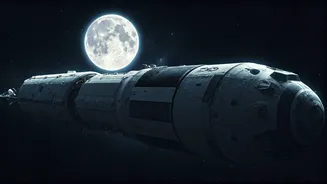
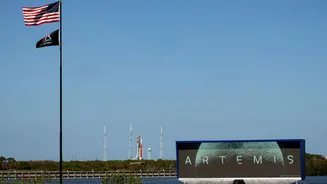
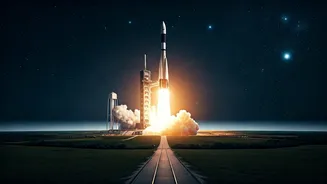
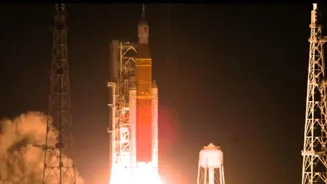
Artemis I. This mission is distinguished by its crewed nature, utilizing the formidable Space Launch System (SLS) rocket and the state-of-the-art Orion spacecraft. Launching from the iconic Kennedy Space Center in Florida, Artemis II is designed to propel astronauts further into the lunar realm than ever before and bring them safely back to Earth. A primary objective is to rigorously test and verify the spacecraft's critical systems, including its advanced navigation, life support, propulsion, and communication capabilities, all while operating with a human crew aboard. Unlike previous lunar endeavors, Artemis II will not land on the Moon but will instead follow a carefully planned free-return trajectory. This specific orbital path will take the Orion capsule around the far side of the Moon and back towards Earth, a route chosen for its inherent safety during these initial deep-space crewed flights, allowing for vital system validation without the complexities of orbital insertion or landing maneuvers.
Launch Day & Duration
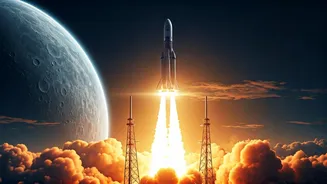
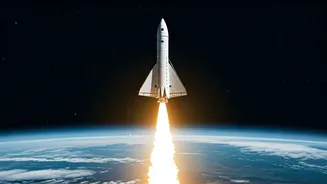
The Artemis II mission is slated for liftoff no earlier than April 1, 2026, with a targeted launch time of 6:24 p.m. EDT. This highly anticipated mission is projected to span a total duration of 10 days, as reported by NASA. Upon achieving orbit around Earth, the powerful upper stage of the SLS rocket will initiate a critical translunar injection burn. This maneuver will precisely propel the Orion spacecraft onto its trajectory towards the Moon. Following its flyby of the lunar body, Orion will initiate its return journey, navigating back towards Earth's atmosphere for a controlled re-entry. The mission's grand finale will be a splashdown in the vast expanse of the Pacific Ocean, where recovery operations will swiftly commence to safely retrieve the crew and the spacecraft.
Artemis II Crew Revealed
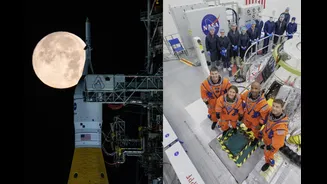
The historic Artemis II crew, four accomplished astronauts poised to venture beyond Earth's orbit, has been officially announced. Leading this groundbreaking mission as Commander is Reid Wiseman. Victor Glover will serve as the Pilot, expertly guiding the spacecraft. The Mission Specialist roles will be filled by Christina Koch, a seasoned astronaut with extensive spaceflight experience, and Jeremy Hansen from the Canadian Space Agency (CSA), marking a significant international collaboration on this lunar endeavor. Together, this diverse and highly trained team will undertake the critical task of testing the Orion spacecraft and its systems during deep space transit, paving the way for future lunar surface missions and beyond.
Watching the Launch Live
For space enthusiasts eager to witness humanity's next giant leap, NASA is providing comprehensive live coverage of the Artemis II mission. The official broadcast will be accessible on both YouTube and NASA+, the agency's complimentary streaming platform. The full broadcast commences on Wednesday at 7:45 a.m. EDT, offering a detailed view of pre-launch activities, including vital tanking operations, and will continue throughout the entire 10-day mission. For those seeking a more focused experience, the NASA+ stream will present a curated feed starting at 12:50 p.m. EDT. This condensed broadcast will highlight pivotal moments, such as the astronauts donning their suits and will conclude after the Orion spacecraft's solar arrays are successfully deployed shortly after liftoff. Additional coverage includes post-launch press conferences and regular mission status briefings, ensuring viewers remain informed every step of the way.
Pre-Launch Preparations & Weather
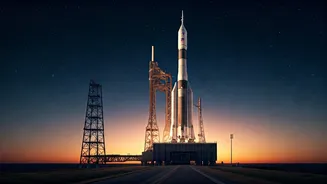
The journey to the Moon begins long before liftoff, with extensive pre-launch operations commencing days in advance. Engineers meticulously conduct comprehensive system checks on every critical component of both the Space Launch System rocket and the Orion spacecraft. These diagnostics encompass rigorous testing of the engines, sophisticated avionics, power batteries, and communication systems. Ensuring the Orion spacecraft's flight batteries are fully charged is paramount, as they are essential for the launch and early phases of flight. Similarly, the core stage batteries are also charged to support the initial ascent. Astronauts' suits are subjected to pressure checks within the Orion spacecraft to guarantee their flawless operation. As the countdown enters its final hours, all non-essential personnel clear the launch pad area. The automated ground launch sequencer then takes over, orchestrating the intricate final countdown procedures. This system issues precise commands for engine ignition, valve operations, and critical system transitions, ensuring a smooth and safe launch sequence.
Weather's Crucial Role
Weather conditions play an indispensable role in ensuring the readiness and safety of the Artemis II launch. Forecasts are meticulously monitored for the entire launch window, paying close attention to cloud cover, wind speeds, precipitation, and the potential for electrical activity. NASA collaborates closely with the U.S. Space Force, specifically Space Launch Delta 45, to continuously assess atmospheric and space conditions. Key weather constraints include limitations on wind, cloud ceilings, and lightning. Both ground-level and upper-atmosphere winds are carefully tracked to maintain vehicle stability during ascent. Furthermore, space weather phenomena, such as solar flares and charged particle activity that could disrupt communications and navigation, are also evaluated. As of NASA's latest update on March 30, the outlook indicates an 80% probability of favorable weather conditions. The primary weather concerns highlighted are cloud coverage and the possibility of high ground winds. Continuous, real-time monitoring persists right up until liftoff, and any deviation from established weather criteria will result in a launch delay to safeguard the crew and the invaluable mission hardware.