







Printing Human Organs
The field of bio-printing, where living cells are used to create three-dimensional structures, has seen tremendous growth. Scientists are now capable of printing functional
human organs, a feat that once seemed impossible. This technology has the potential to transform healthcare, offering solutions to organ shortages. It can also revolutionize drug discovery, allowing researchers to test medications on printed tissues. Despite ongoing challenges, like ensuring the long-term viability of printed organs and developing complex structures, the progress is remarkable. Bio-printing holds great promise for treating diseases and extending human life in innovative ways.
Brain-Computer Interfaces
Brain-computer interfaces (BCIs) are changing how we interact with technology. BCIs allow direct communication between the brain and external devices. Researchers are developing non-invasive methods, such as using electroencephalography (EEG) to measure brain waves, and also exploring invasive techniques involving implantable electrodes. Initial applications include assisting individuals with paralysis by restoring motor functions, controlling devices with thought, and enhancing cognitive capabilities. However, several ethical concerns, including data privacy and potential misuse, still exist. The pace of development indicates a strong possibility that BCIs will become part of everyday life in the near future, changing human-computer interaction forever.
Advanced Robotics Evolves
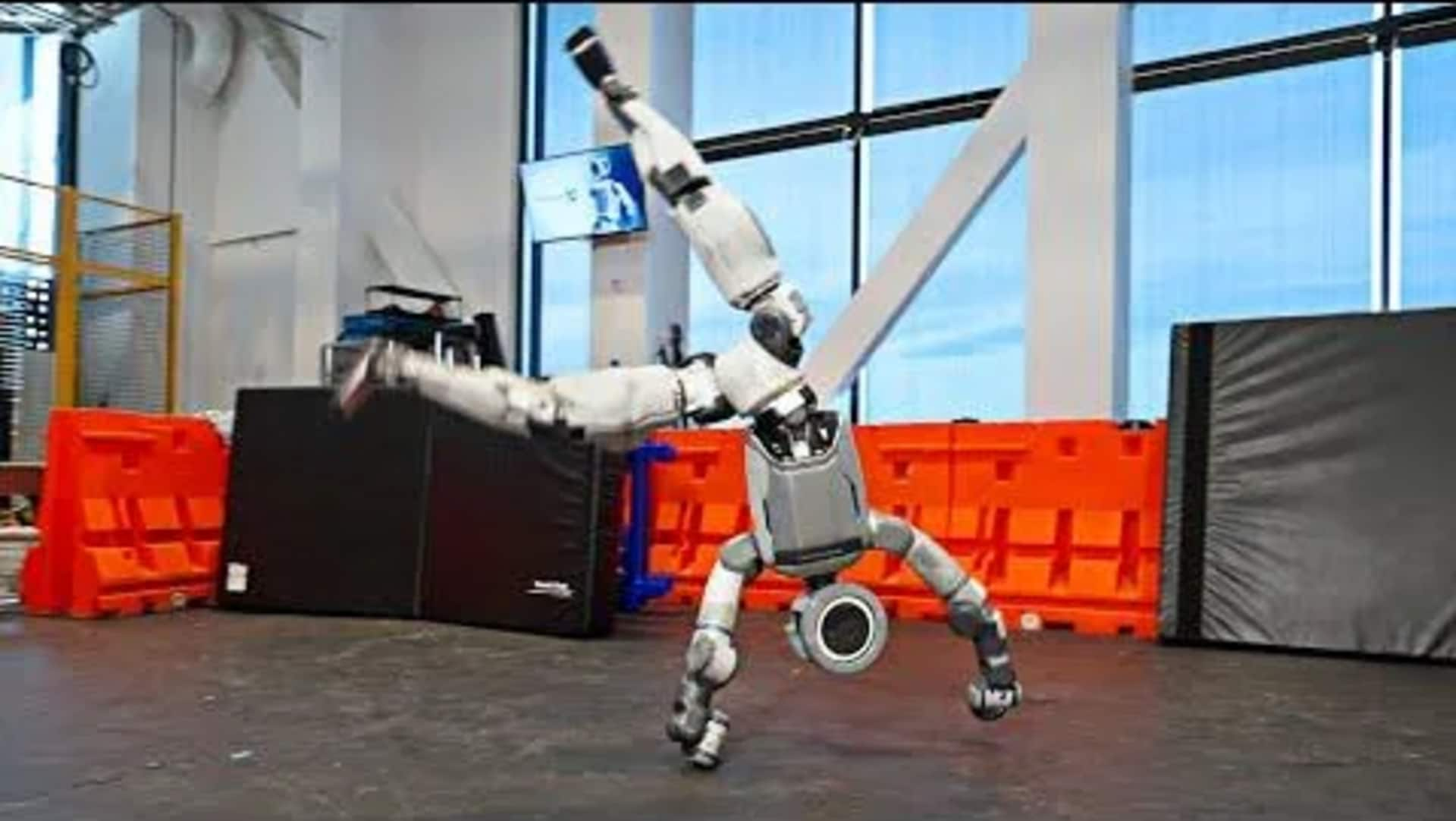
Robotics is experiencing a period of explosive growth. Robots are not just limited to manufacturing anymore, they are becoming increasingly sophisticated. Researchers are building robots with advanced artificial intelligence, improved dexterity, and adaptable designs. These robots can handle complex tasks and operate in unstructured environments, opening up new possibilities in fields like healthcare, exploration, and disaster response. Soft robotics, using flexible and compliant materials, is another area of rapid development. There is growing focus on the ethical implications of robotics, including job displacement and the impact of autonomous weapons systems. The future of robotics promises to be dynamic and influential.
Space-Based Solar Power
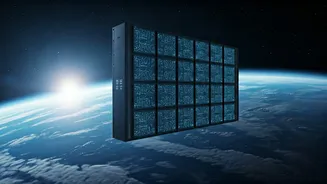
The idea of generating energy from space has gained momentum. Space-based solar power (SBSP) involves deploying solar panels in orbit to capture sunlight and transmit the energy to Earth. This technology could provide a consistent and abundant source of clean energy, unaffected by weather conditions. Many challenges exist, including the cost of launching and maintaining large-scale solar arrays in space and developing effective energy transmission methods. Various organizations, including both public and private entities, are investing in SBSP research. As technology advances and the cost of space travel decreases, SBSP could be a significant step toward solving the world's energy needs and minimizing environmental impact.
Self-Healing Materials
Engineers and materials scientists are developing materials that can repair themselves. Self-healing materials incorporate microscopic capsules filled with healing agents or use intrinsic mechanisms to mend damage. These materials can extend the lifespan of products and reduce the need for repairs. Applications range from aerospace and construction to medical implants. Various approaches are being explored, including polymers that mend themselves through chemical reactions and composites with embedded repair mechanisms. While some self-healing materials are already in use, ongoing research focuses on improving the efficiency, scalability, and versatility of these revolutionary materials, driving advancements in material science.
Lab-Grown Meat Advances
The production of meat in laboratories offers a sustainable alternative to traditional agriculture. Lab-grown meat, also called cultivated meat, involves growing animal cells in bioreactors to produce meat products without the need for traditional farming practices. This technology promises to reduce the environmental impact of meat production, as it uses significantly less land, water, and resources. While challenges such as scaling production, reducing costs, and navigating regulatory hurdles remain, significant progress has been made. As consumer acceptance grows and production methods improve, lab-grown meat may become a viable source of food.
Artificial Photosynthesis Emerges
Artificial photosynthesis mimics the natural process of photosynthesis, where plants convert sunlight, water, and carbon dioxide into energy. Scientists are developing artificial systems to capture solar energy and convert it into fuels, like hydrogen, or other useful chemical compounds. This technology has the potential to produce renewable energy without relying on fossil fuels. Various approaches are being explored, including using semiconductors and specialized catalysts. Progress in artificial photosynthesis could lead to breakthroughs in energy production and environmental sustainability. Research continues to refine the efficiency and scalability of these systems, pushing them toward practical applications.
Quantum Computing Becomes Real
Quantum computing harnesses the principles of quantum mechanics to perform complex calculations that are impossible for classical computers. Quantum computers use quantum bits, or qubits, to represent and process information. These qubits can exist in multiple states simultaneously, enabling enormous computational power. Companies and research institutions are developing quantum computers that can potentially revolutionize fields such as drug discovery, materials science, and cryptography. While quantum computers are still in the early stages of development and face challenges related to stability and scalability, the impact on many areas of science and technology will likely be substantial. The pace of innovation in quantum computing suggests that it may become a transformative technology.