




A Once-Thriving World
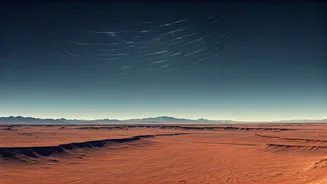
Billions of years ago, Mars was a fundamentally different planet than the cold, arid desert we observe today. Scientific consensus suggests that it once
boasted a considerably more substantial atmosphere, evidence of liquid water flowing across its surface, and a generally warmer climate. This ancient Martian environment, capable of supporting liquid water, paints a stark contrast to its current state of extreme cold, dryness, and a tenuous atmospheric envelope. The primary culprit behind this profound planetary metamorphosis is believed to be the relentless solar wind, a continuous outflow of charged particles emanating from the Sun. Over eons, this solar bombardment has gradually eroded away Mars' protective atmosphere. As this atmospheric shield weakened, global temperatures plummeted, and the surface water, once a prominent feature, began to dissipate, setting the stage for the planet's current desolate appearance. Understanding this transition is key to comprehending Mars' past habitability and its potential for future human presence.
ESCAPADE's Crucial Mission
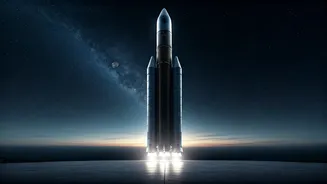
To meticulously investigate the intricate processes behind Mars' atmospheric loss, NASA initiated the ESCAPADE (Escape and Plasma Acceleration and Dynamics Explorers) mission. Launched on November 13, 2025, the mission's sophisticated scientific instruments became fully operational by February 25. These advanced tools are specifically designed to study the mechanisms by which Mars shed its atmosphere and to document the ongoing influence of solar activity on the planet. Beyond its Martian objectives, ESCAPADE will also gather vital new data on space weather phenomena encountered both during its journey to Mars and in the vicinity of Earth. The insights gleaned from ESCAPADE's findings are anticipated to significantly enhance NASA's preparedness for future human missions by providing a deeper understanding of the harsh Martian environment, thus contributing to the development of robust protocols for safeguarding astronauts against the challenges of solar events on the Red Planet.
Dual Spacecraft Advantage
ESCAPADE is groundbreaking as the first mission to deploy two spacecraft in orbit around Mars simultaneously. This unique dual-spacecraft configuration empowers scientists with an innovative method to observe Mars' magnetosphere, the region dominated by its magnetic field, and to meticulously track its dynamic changes over short temporal scales. The ability to have two distinct vantage points allows for a more profound comprehension of cause and effect – specifically, how the solar wind interacts with Mars' magnetic field. Unlike previous missions that relied on single spacecraft observations, ESCAPADE provides a simultaneous, stereo-like perspective. This enables researchers to better correlate events occurring in different regions of the Martian environment, offering unprecedented clarity on dynamic processes. When the spacecraft initially arrive, they will occupy the same orbit, observing the same areas sequentially, which will help pinpoint the precise timing and location of atmospheric and magnetic field variations, allowing for measurements on timescales as brief as two minutes.
Unveiling the Hybrid Magnetosphere
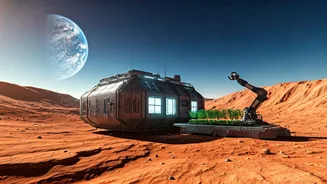
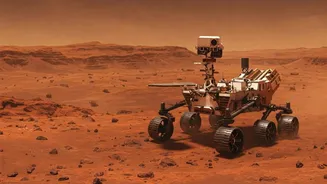
Future human explorers on Mars will face significantly higher exposure to solar radiation compared to individuals on Earth. Earth benefits from a robust global magnetic field that acts as a formidable shield against energetic particles from the Sun. Mars, however, lost its once-strong global magnetic field eons ago. Today, its magnetic environment is characterized by localized, scattered magnetic regions within its crust, coupled with a constantly shifting field generated by the interplay between the solar wind and charged particles in the upper atmosphere. This complex arrangement creates what scientists term a 'hybrid' magnetosphere, offering only marginal protection. In conjunction with Mars' thin atmosphere, this limited shielding allows solar radiation to more readily penetrate the surface, posing a considerable risk to human astronauts. Understanding this 'hybrid' magnetosphere is therefore paramount for ensuring astronaut safety.
Exploring the Ionosphere
Beyond its primary focus on atmospheric loss and the magnetosphere, ESCAPADE will also conduct in-depth investigations into the Martian ionosphere. This crucial upper atmospheric region is composed of ionized gases and plays a vital role in phenomena such as radio wave propagation and the functioning of communication and navigation systems. For future human missions to Mars, a comprehensive understanding of the ionosphere is essential. It is within this atmospheric layer that signals for services like GPS and long-distance communication would operate. By studying the ionosphere's composition and dynamics, scientists can better predict how atmospheric gases escape into space and also ensure the reliability of critical communication links needed for sustained human presence. The data gathered will contribute to the development of robust communication and navigation strategies for astronauts operating on the Red Planet.
An Extended Journey
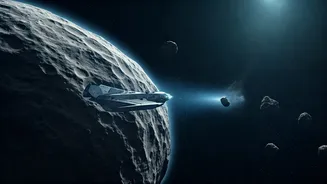
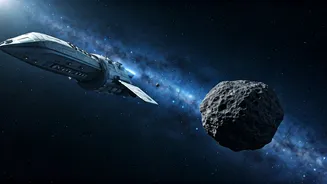
ESCAPADE employs an innovative approach to its interplanetary trajectory, departing from the typical direct path to Mars. Instead of a direct flight, the spacecraft will first enter a looping orbit around Earth's second Lagrange point (L2), situated approximately one million miles from Earth. This extended path allows for greater flexibility in launch timing. Following this 'loiter' phase, the spacecraft will utilize Earth's gravitational pull for an assist, slingshotting towards Mars. The mission's arrival at Mars is anticipated in September 2027. Notably, during this extended journey, the spacecraft will traverse a previously unexamined region of Earth's distant magnetotail, offering opportunities for unique scientific discoveries related to our own planet's magnetic environment. Furthermore, throughout the 10-month transit, ESCAPADE will continuously collect data on the solar wind and interplanetary magnetic conditions, mirroring the space environment that future human explorers will navigate.