



Solar Storm Basics
Geomagnetic storms are triggered by disturbances in the Earth's magnetosphere, which is primarily influenced by the solar wind. This solar wind consists
of charged particles constantly emitted by the sun. When there's increased solar activity, such as coronal mass ejections (CMEs) or solar flares, the amount of these particles increases dramatically. These high-energy particles then interact with Earth's magnetic field. A G2 storm, in the context of the National Oceanic and Atmospheric Administration's (NOAA) geomagnetic storm scale, means the event is considered moderate. These events can occur due to fluctuations on the sun, leading to changes in the flow of the solar wind. The intensity of these storms is ranked on a scale from G1 to G5, with G1 being minor and G5 being extreme. Understanding this scale is crucial for assessing potential disruptions and impacts. The G2 watch indicates a moderate level of activity, meaning there's a heightened chance of auroral displays at higher latitudes, and possibly some minor effects on technological systems.
Potential Auroras
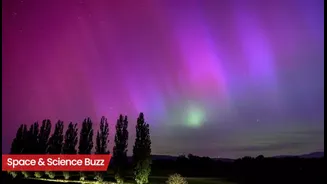
One of the most visible effects of a geomagnetic storm is the potential for auroras, often known as the Northern and Southern Lights. When charged particles from the sun interact with the Earth's atmosphere, they collide with gases like oxygen and nitrogen. This collision causes these gases to glow, producing the beautiful displays of light we see as auroras. These auroras typically appear near the Earth's polar regions, but during stronger storms, they can be visible at lower latitudes. During a G2 storm, the chances of seeing auroras increase, and they might even be visible in areas where they are not typically observed. The intensity and visibility of auroras are also influenced by factors like the time of day, the presence of clouds, and the level of light pollution. For those who want to witness these mesmerizing displays, this presents a perfect opportunity to watch the skies.
Technological Impacts
While beautiful to behold, geomagnetic storms can also pose challenges to technology. The charged particles from the sun can interfere with radio communications, disrupt satellite operations, and potentially cause issues with power grids. Satellites in orbit are especially vulnerable as they may experience increased drag due to the charged particles, causing issues with their orbits and operations. High-frequency (HF) radio communications, often used for long-distance communication, might also experience interference during a storm. Power grids might experience voltage fluctuations, which can potentially lead to damage to transformers and other electrical components. While a G2 storm is considered moderate, these effects are usually minor. Experts constantly monitor the space environment to provide alerts and take preventive measures. These measures can include adjusting satellite operations, alerting power companies, and issuing warnings for radio communication users.
Mitigation and Monitoring
Several organizations, including NOAA, play a vital role in monitoring space weather and issuing alerts. Space weather forecasts are based on observations of the sun, data from satellites, and models that predict how solar events will affect Earth. Scientists use a variety of instruments and technologies to monitor the sun's activity, the solar wind, and the Earth's magnetic field. These observations are then used to create geomagnetic storm forecasts, providing the information necessary to anticipate and respond to potential disruptions. When a geomagnetic storm watch or warning is issued, it means that there is an increased likelihood of disturbances. These alerts offer an opportunity to prepare, and various industries and organizations implement strategies to mitigate potential impacts. Communication networks often adjust their operations to minimize the effects of radio interference, while power companies might take steps to protect their grids from voltage fluctuations.