



Discovering Distant Worlds
The quest to find exoplanets is a testament to human curiosity and technological advancement. Scientists employ various methods to detect planets outside
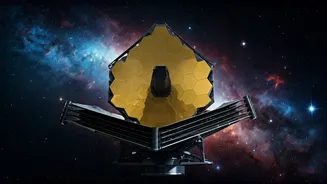
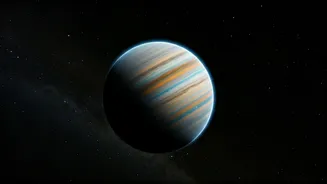
our solar system, with the transit method being a particularly effective one. This technique involves observing the slight dimming of a star's light as a planet passes in front of it. Another crucial approach is the radial velocity method, which measures the subtle wobble of a star caused by the gravitational pull of orbiting planets. The James Webb Space Telescope, a revolutionary tool, allows astronomers to analyze the light passing through exoplanet atmospheres, revealing their composition and possibly signs of life. The discovery of each new exoplanet deepens our understanding of planetary formation and the conditions that might support life elsewhere in the universe. Scientists continuously refine their methods and technologies, enabling them to discover an increasingly diverse range of exoplanets, from gas giants to rocky worlds that resemble Earth.
Exploring Planetary Atmospheres
Understanding the composition of exoplanet atmospheres is essential to determining their potential habitability. The James Webb Space Telescope plays a crucial role here, as it can analyze the light that passes through these atmospheres. By studying the way light interacts with the atmospheric gases, scientists can identify the presence of water vapor, methane, and other molecules that could indicate the presence of life. These observations help researchers assess whether a planet's atmosphere is capable of supporting liquid water on its surface, which is considered a key ingredient for life as we know it. Additionally, the study of atmospheric characteristics, such as temperature and pressure, provides insight into the overall climate of these distant worlds. Comparing the characteristics of exoplanet atmospheres to those of Earth offers invaluable insights into the range of possibilities for planetary habitability and the potential for life beyond our planet.
The Search for Life
The ultimate goal of exoplanet research is the search for life beyond Earth. While directly detecting alien life is a significant challenge, scientists are making remarkable progress. One primary focus is the identification of biosignatures – indicators of life within an exoplanet's atmosphere. These may include gases such as oxygen or methane, which are produced by living organisms on Earth. The presence of these gases, along with other factors, would increase the likelihood of life. Researchers also consider the 'habitable zone' around a star, where conditions might allow liquid water to exist on the surface of a planet. Furthermore, the search extends to investigating the possibility of extraterrestrial intelligence by analyzing radio signals or other forms of communication. The search for life continues to push the boundaries of scientific knowledge and fuels the imagination of people worldwide, inspiring exploration and discovery.
Science Meets Fiction
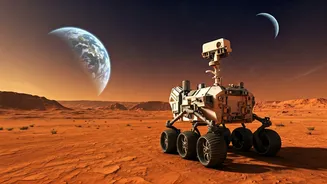
The exploration of exoplanets has profoundly impacted science fiction, influencing narratives and sparking creative visions. Authors and filmmakers have drawn inspiration from scientific discoveries, imagining life on various exoplanets, from lush, Earth-like worlds to bizarre environments. The concept of terraforming, or transforming the atmosphere of a planet to make it habitable for humans, has become a recurring theme. Science fiction provides a space to explore the ethical and societal implications of contact with extraterrestrial life. Simultaneously, science fiction often serves as a catalyst for real-world scientific advancements. The fictional portrayals of interstellar travel, advanced technologies, and alien civilizations have inspired researchers and engineers to push the boundaries of what is possible. As the science of exoplanets progresses, it fuels the imagination, inspiring new stories and offering new perspectives on our place in the cosmos.
Challenges and Future
Despite remarkable progress, the field of exoplanet research faces significant challenges. One major difficulty is the vast distances involved, making direct observation of exoplanets incredibly difficult. The development of more powerful telescopes and advanced imaging techniques is crucial to overcome these challenges. The sheer number of exoplanets identified poses another hurdle, requiring scientists to prioritize targets for detailed study. Future missions will focus on characterizing exoplanet atmospheres, searching for biosignatures, and attempting to directly image exoplanets. The discovery of Earth-like planets in the habitable zones of their stars will be a primary focus, as these worlds hold the greatest potential for supporting life. International collaboration and resource allocation remain vital for continued progress, allowing scientists to pool knowledge and resources to better understand these distant worlds.